
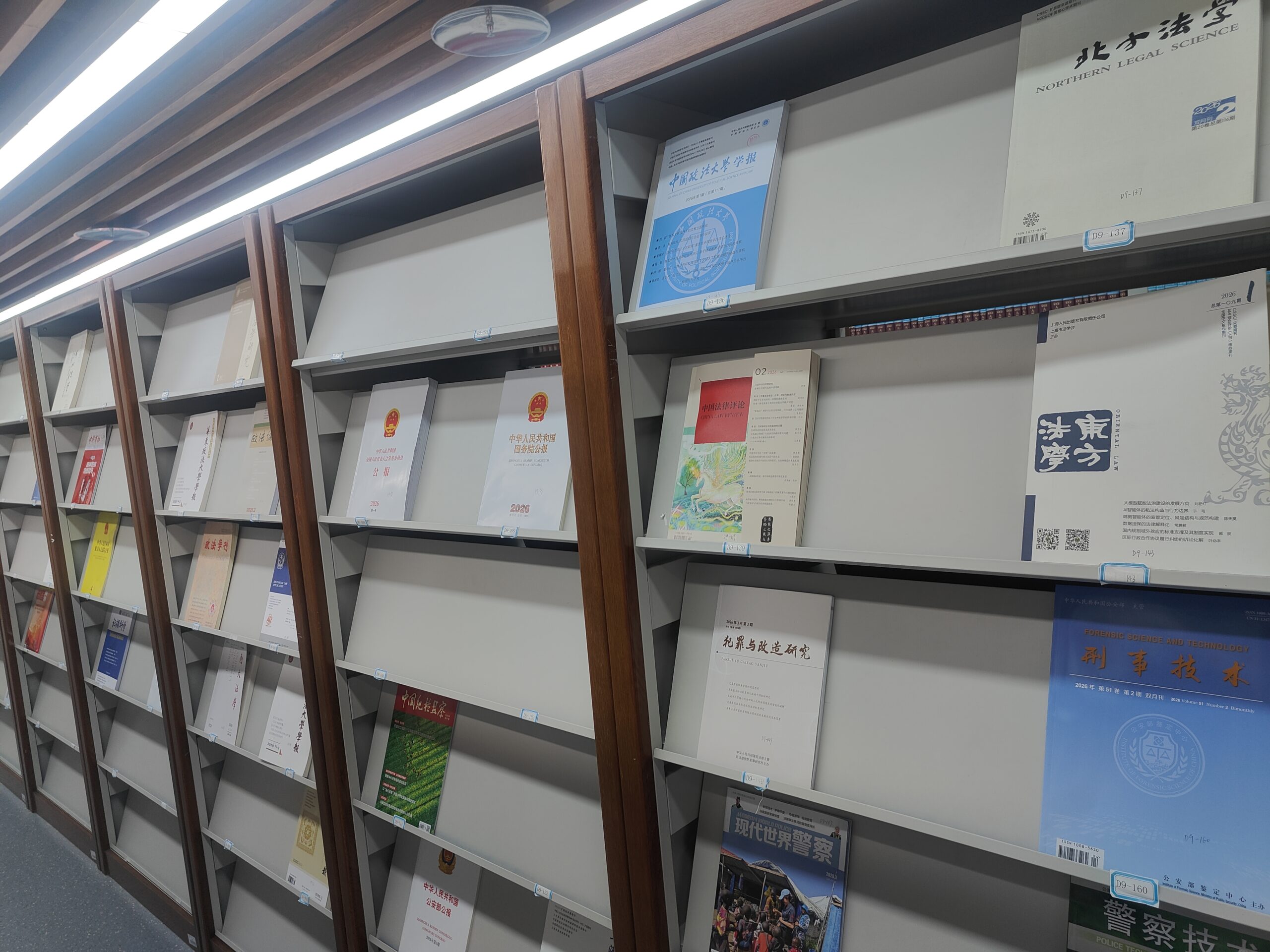

Three Chinese people with a double bass
sat on the street and told each other things.
Then the police came and asked, “What is that?”
— Drei Chinesen mit dem Kontrabass, traditional German children’s song
Everything that happened in the first half of 2026 seems to confirm Walter Benjamin’s image of history: “the rubble-heap before him grows sky-high.” For China, however, these months brought a long-lost sense of spring. Western politicians, shocked by such a rubble-heap, have selectively forgotten the fierce criticisms they once directed at China, and have turned to Beijing to consider another possibility. The Global South, for its part, had already placed a certain expectation in China’s rise from the beginning; the rubble-heap has only strengthened that belief.
In this way, geopolitics shifts at a pace that even the most cynical playwright could hardly imagine. As part of this shift, German public discourse on China has once again moved from “primal fear” to mild curiosity toward a “Schrödinger’s China”. Yet this curiosity is destined to be difficult to satisfy. Years of suspicion have already left their mark on academia: for example, the shrinking of Sinology faculties in Germany is almost visible to the naked eye.
But perhaps Sinology was never fully able to achieve its aim. The discipline itself has long been under pressure from the biases of the German research system, and within that system it is often treated as an Orchideenfach, an “orchid discipline.” At the same time, its research tradition, which can be traced back to the Ordinarius-dominated universities of the nineteenth century, often makes it difficult for the discipline to meet twenty-first-century China on equal terms. The Japanese scholar Koyasu Nobukuni once commented on the German tradition of “Oriental studies”—of which Sinology is a part—in the following terms: “Behind what may be called their reckless undertaking, there lies an impulse and desire to control their object in an epistemological sense. Not only a desire, but also a kind of arrogance: the arrogance of mastering the object at the level of epistemology” (Koyasu, 2012).
Area studies, born out of the Cold War context, may offer a more balanced and more contemporary perspective. Indeed, we seem to see more and more German research on China emerging from outside Sinology faculties. Yet the changing interests of area studies often reflect less how far we are able to understand China than one’s home country’s own internal concerns at a given moment. In Germany, this anxiety has been summarized in the emphasis placed on China-Kompetenz, or the idea of China kennen, China können. But when it comes to concrete questions, this produces a split in thought: a wary respect shaped by economic rationality, and a moral condescension shaped by the ethics of conscience. China appears as a prism, refracting the frustration of a self-confident knowledge system when confronted with complexity.

Once scholars who seek a decent form of understanding of China fall into this discussion, whether their concerns come from the left or the right, excessive enthusiasm for China-Kompetenz risks pulling them away from scholarly inquiry. As researchers, are we seeking a form of global solidarity around a particular issue, or are we genuinely curious about what our neighbours are saying and thinking?
When this question is brought into the field of legal history, the cognitive difference becomes milder but also makes people more powerless. As a Chinese legal historian working in Germany, I find that my Chinese identity is always more visible than my identity as a legal historian. At times, this causes some difficulty. At the same time, whenever I read the many sketches of “Chinese law” in the local public media, it is easy to see how people attribute many phenomena observed in China today to an institutional system that was once influential in China two thousand years ago. As a legal historian, I instinctively find such conclusions too casual. As a Chinese, I am also struck by the tolerance shown in public space toward such casual claims. It is precisely at such moments that I find myself wishing that my international friends and colleagues could know more about the work and mindset of Chinese legal historians.
But where should we begin? If we want to avoid the problems spotted in Sinology or area studies, what else can we do? Before his visit to China in February this year, German Chancellor Friedrich Merz summarized his view of China in these words: “China can no longer be bypassed” (An China kommt niemand mehr vorbei). Boah! How well put. If China can no longer be bypassed, then perhaps the first thing to do, once we stop walking past it, is to look at it directly.
For researchers, to look directly at the work of our colleagues means, above all, to read what they have written. Perhaps we can therefore begin by asking what our Chinese colleagues were discussing—for example, over the past year, and by finding out what questions mattered to them in 2025.
Surely, this is not an easy task. The Yearbook of Chinese Legal History Studies published by China Social Sciences Press for 2024 already runs to 563 pages, and there is little reason to expect fewer pages for 2025. Still, we may choose some indicators. One such indicator is: what legal history articles managed to “survive” in the core journals of Chinese legal scholarship.
Yes, “survive”. Compared to more than 700 law faculties nationwide, there are only 27 accredited core law journals. This list is compiled by the China Law Society and adjusted annually. None of these journals are dedicated specifically to legal history; in principle, most are open to all fields of law. Publication in these journals is crucial for a legal scholar’s career in China. For a young scholar, lacking even a single publication there, even as a corresponding author, often means having little chance of securing a long-term position at a top university. Yet publication depends not only on the quality of the article itself, but also on various considerations beyond the text. These journals are affiliated with different universities and research institutions, forming distinct camps of their own. To grasp this complexity, German colleagues may simply imagine the process of shortlisting candidates for a professorial chair.
Research that passes through this filter is therefore not necessarily the most innovative or the best in an absolute sense. It is, however, the most competitive, and the kind that best reflects shared assumptions and Zeitgeist within the community. Each article is the outcome of repeated negotiation among authors, editors, and institutions. What could be more suitable for sketching the “mindset” of Chinese legal history scholarship in 2025?
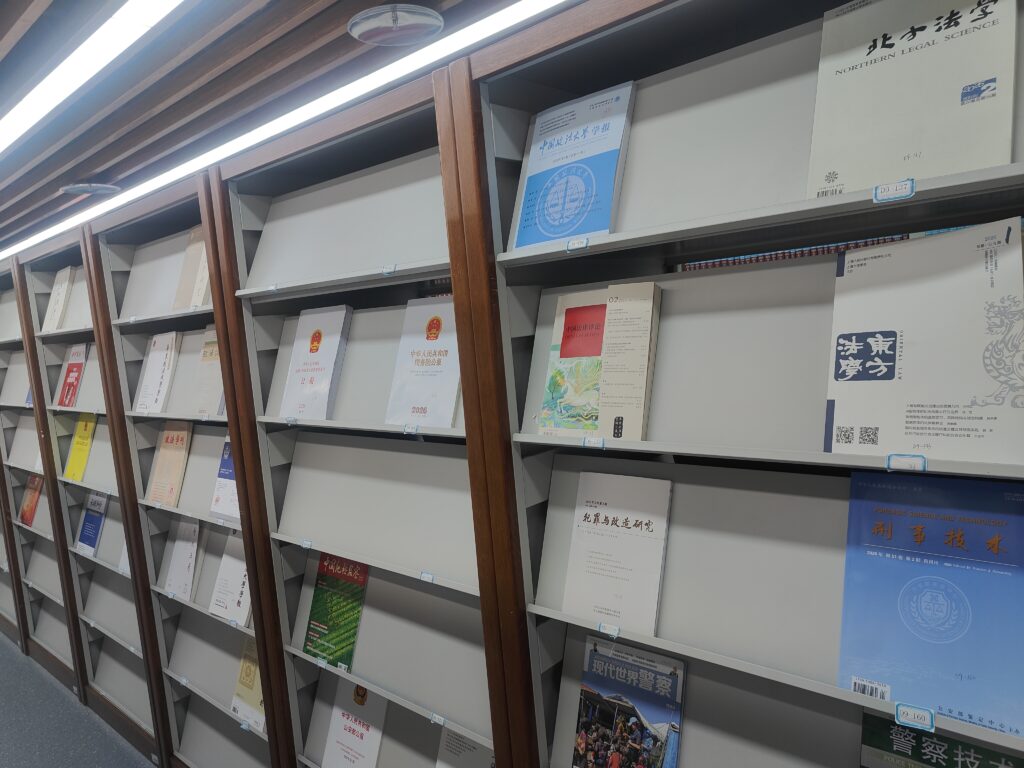
General Observation
Of the 27 journals, two belong to legal journalism, and are therefore excluded. Among the remaining 25 journals, seven did not publish a single article related to legal history in 2025 (including the only two English-language journals on the list). Of the remaining 18 journals, a total of 57 legal history articles were published, as shown below:
Article List by Journals
All Chinese and English titles were manually collected from the CNKI database. For items for which no English title was provided by the author, the English titles follow the automatic translation generated by CNKI, for the purpose of facilitating subsequent retrieval.
Social Sciences in China 中国社会科学 (2)
【1】屈⽂⽣:殖⺠话语与近代英美在华“管辖权政治”(2025.3)
QU Wensheng, Colonial Discourses and Anglo-American “Jurisdictional Politics” in Modern China
【2】凌鹏:“义”与法治社会建设的本⼟资源——“先尽亲邻”习惯的再探讨(2025.4)
LING Peng, Yi and Local Resources for Building a Rule-Based Society—Revisiting the Custom of XianjinQinlin
China Legal Science 中国法学 (2)
【3】张晋藩、闫静怡:论中国古代经济管理法(2025.6)
ZHANG Jinfan & YAN Jingyi, On Economic Regulatory Laws in Ancient China
【4】周尚君:政法范畴形成论(2025.6)
ZHOU Shangjun, The Theory of Formation of the Politics and Law Scope
Chinese Journal of Law 法学研究(4)
【5】吴奇琦:法律⾏为汉字术语的⽇本翻译与中国传播史(2025.1)
WU Qiqi, The Translation History of the Term Rechtsgeschäft in Japan and Its Spread in China
【6】宋玲:⽂化传承视⻆下的中国传统法典编纂(2025.1)
SONG Ling, The Compilation of Chinese Traditional Code from the Perspective of Cultural Inheritance
【7】李富鹏:⽂化中国的法律构建——以历史⽂化遗产法为中⼼(2025.2)
LI Fupeng, The Legal Construction of Cultural China
【8】周东平:赓续法脉:中华法的条标⽴法设置(2025.3)
ZHOU Dongping, Continuing the law: the legislative setting of the Chinese law
Peking University Law Journal 中外法学(2)
【9】聂鑫:“古今⼀线牵”的近代中国司法改⾰:以⺠国时期四次全国司法会议为中⼼
(2025.1)
NIE Xin, Judicial Reform in Modern China Connecting Ancient and Modern An Observation of the Four National Judicial Conferences during the Republic China Period
【10】林兆然:国际领⼟法理论的英国塑造:历史、影响与反思(2025.4)
LIN Zhaoran, The British Construction of International Law of Territory: History, Impacts and Reflections
The Jurist 法学家(1)
【11】吴景键:晚清国际法思想中的⾃然法想象:法学知识的跨国交流及其本⼟建构
(2025.2)
WU Jingjian, The Natural Law Imaginationin in Late Qing International Law Thought: The Transnational Exchange of Legal Knowledge and Its Indigenous Construction
Studies in Law and Business 法商研究(2)
【12】王海军:中国“检察公益诉讼”概念的发展史考察(2025.1)
WANG Haijun, A Study on the Development History of the Concept of “Procuratorial Public Interest Litigation” in China
【13】冯学伟:中国传统典权的权利结构及运作机制(2025.5)
FENG Xuewei, The Right Structure and Operational Mechanisms of Traditional Chinese Pawning Right
Law Science 法学(3)
【14】陈锐:中国古代法律歌诀及其价值(2025.3)
CHEN Rui, Ancient Chinese Legal Verse and Its Value
【15】⽅潇:⼈可貌相:中国传统司法中的“⾯相貌审”及其近代命运(2025.4)
FANG Xiao, People Can Be Judged by Appearance: “Physiognomy and Appearance Judgement” of Traditional Judiciary in China and Its Modern Fate
【16】尤陈俊:20世纪中国法律史学界的研究⽅法⾔说及其反思(2025.10)
YOU Chenjun, Research Method Narration and Its Reflection in the Field of Chinese Legal History in the 20th Century
Science of Law (Journal of Northwest University of Political Science and Law) 法律科学(3)
【17】喻中:论世界法学版图的重绘(2025.1)
YU Zhong, On the Redrawing of the Global Legal Map
【18】雷磊:英国法治与德国法治国的历史及其启示(2025.2)
LEI Lei, The History of English Rule of Law and German Rechtsstaat with Its Inspiration
【19】陈玺:唐宋时期效⼒叙复法的实践与转型(2025.5)
CHEN Xi, The Practice and Transformation of the Law of Efficacy Reclassification in the Tang and Song Periods
Law Review 法学评论(5)
【20】李卫东:古代中国城市发展中的法及特征(2025.1)
LI Weidong, Law and Its Characteristics in the Development of Ancient Chinese Cities
【21】刘苍瑜:新中国制宪权代表的复合结构(2025.3)
LIU Cangyu, The Composite Structure of the Representatives of the Constitutional Power in New China
【22】邵⽅:庄儒之间属天的链接——以庄⼦对仁义的批驳为视⻆(2025.4
SHAO Fang, The Heavenly Connection between Zhuangzi and Confucianism: A Perspective on Zhuangzi’s Refutation of Benevolence and Righteousness
【23】尤陈俊:法律史学科危机论的由来、根源与破局(2025.5)
YOU Chenjun, The Origin and Breakthrough Strategies of the Crisis Theory of Legal History
【24】陈翠⽟:中国原创法理概念:在东亚的移转与演进(2025.6)
CHEN Cuiyu, China’s Original Legal Concepts: Transplantation and Evolution in East Asia
Tribune of Political Science and Law: Journal of China University of Political Science and law 政法论坛(8)
【25】邹亚莎:何种之公:清代族⽥的财产属性及观念(2025.1)
ZOU Yasha, What Kind of Public Property: the Property Attribute and Concept of Clan Land in the Qing Dynasty
【26】张晋藩:明末清初的教育思想与⽴法(2025.3)
ZHANG Jinfan, Educational Thoughts and Laws in the Late Ming and Early Qing Dynasties
【27】肖洪泳:中国法律研究的汉学视野及其趋势(2025.3)
XIAO Hongyong, The Sinological Perspective and Trends of Chinese Legal Studies
【28】潘峙宇:近代中国审级制度的建构困境与实效反思(2025.3)
PAN Zhiyu, Construction Predicament and Reflection on the Practical Effect of the Judicial Instance System in Modern China
【29】陈灵海:清代章程的性质、功能与法律地位(2025.4)
CHEN Linghai, The Nature, Function, and Legal Status of Zhangcheng(Regulations) in the Qing Dynasty
【30】陈翠⽟:中国传统法理学问的成⻓与原创法理概念的形成(2025.5)
CHEN Cuiyu, The Growth of Chinese Traditional Jurisprudence Knowledge and the Original Formation of the Concept Fali
【31】罗冠男:清代会典与则例的关系:编纂、内容及适⽤(2025.5)
LUO Guannan, The Relationship Between Hui Dian and Zeli in the Qing Dynasty: Codification, Contents and Application
【32】李俊强:律博⼠与魏晋南北朝律学:因⾰、传习及⾏⽤(2025.6)
LI Junqiang, The Relationship between “lv Bo Shi” and the legal Studies of the Wei, Jin, Southern and Northern Dynasties:Innovation, Transmission and Application
Law and Social Development 法制与社会发展(3)
【33】谢晶:清代案例编纂的法理及史鉴价值(2025.5)
XIE Jing, The Jurisprudential and Historical Value of the Compilation of Cases in the Qing Dynasty
【34】侯欣⼀:何以可能:透过判例形塑中国古代共识性法理(2025.5)
HOU Xinyi, How Is It Possible:Shaping Consensus-Based Fali Through Judicial Cases in Ancient China
【35】赖骏楠:亲属关系⼀定会“扭曲”财产权吗?——基于清代诉讼档案观察的理论思考
(2025.3)
LAI Junnan, Does Kinship Relationship Necessarily “Distort” Property Rights? Theoretical Reflections Based on Observation of Qing Dynasty’s Litigation Archives
Modern Law Science 现代法学(1)
【36】秦涛:论百年法史学中的“法”(2025.6)
QIN Tao, The Evolution of the Concept of fa (Law) in a Century of Legal Historiography
Journal of Comprative Law ⽐较法研究(1)
【37】苏亦⼯:中国传统丁忧制度的形成及其南北异趣(2025.6)
SU Yigong, The Formation of the Traditional Chinese Dingyou System and Its Different Development Trend
Tsinghua Law Journal 清华法学(1)
【38】陈寒⾮:制度层叠与⺠间“祖业地权”秩序的形成——基于湘北江村的⽥野调查
(2025.4)
CHEN Hanfei, Institutional Layering and the Formation of the Folk “Ancestral Land Rights” Order: Field Research based on Jiangcun Village in Northern Hunan
Political Science and Law 政治与法律(5)
【39】王⽴⺠:复兴中华法系与建构中国⾃主法学知识体系(2025.1)
WANG Limin, Revitalizing the Chinese Legal System and Developing China’s Independent Legal Knowledge System
【40】贺海仁:论⽆讼⽂明(2025.2)
HE Hairen, On Non-Litigation Civilization
【41】孙康:中国传统守法模式的特点、价值与优化途径——兼与⻄⽅“法律信仰”话语⽐较 (2025.2)
SUN Kang, The Characteristics, Value, and Optimization Path of Traditional Chinese Law-abiding Mode—Also A Comparison with the Western Discourse of “Belief in the Law”
【42】栾兆星:法⽂化视域下社会主义核⼼价值观融⼊法治建设探究(2025.2)
LUAN Zhaoxing, The Research on Incorporating Core Socialist Values into the Development of Rule of Law from the Perspective of Legal Culture
【43】胡译之:法理抑或政争:⺠国初年⾏政审判模式之争的“表”与“⾥”(2025.2)
HU Yizhi, Legal Theory or Political Conflict: On Stage and Backstage of the the Dispute over Administrative Litigation Models in the Early Republic of China
Contemporary Law Review 当代法学(4)
【44】刘晓林:唐律中的“例”:来源、效⼒及其展开(2025.1)
LIU Xiaolin, “Li” in Tang Law: Source, Effect and its Extension
【45】⻩雄义:中华优秀传统法律⽂化的功能与运⽤——以⾃主法学知识体系建构为视⻆ (2025.3)
HUANG Xiongyi, The Function and Application of Chinese Excellent Traditional Legal Culture— The Perspective of Constructing Autonomous Legal Knowledge System
【46】⻢腾:墨守成规:《墨⼦》“城守各篇”的法律思想与规范(2025.4)
MA Teng, Mo shou cheng gui: The Legal Thought and Regulations in the ‘Defensive Chapters’ of Mozi
【47】李⿍楚:中国⾃主法学知识体系如何理论借鉴:历史法学在近代中国的命运及启示
(2025.5)
LI Dingchu, How to Develop China’s Autonomous Legal Intellectual System through Theoretical Reference—The Destiny and Implications of the Historical School of Jurisprudence in Modern China
Journal of East China University of Political Science and Law 华东政法⼤学学报(8)
【48】张⼀⺠:再论清代“杀尊亲属”案件的裁断(2025.1)
ZHANG Yimin, Revisiting the Adjudication of the Qing Dynasty’s Cases of Killing Elder Relatives
【49】陈会林:苏区离婚法“偏于保护⼥⼦”的制度逻辑与中国意义(2025.2)
CHEN Huilin, Revolutionary Legislation in Modern China:A Case Study of the “Biased in Favor of Protecting Women” in the Soviet Divorce Law
【50】李洋:经由司法巡回的国家治理——⼀项关于英格兰总巡回法庭的个案观察(2025.2)
LI Yang, National Governance through the Judicial Circuit:A Case Study of General Eyre in Medieval England
【51】蔡晓荣:清末⺠初上海会审公廨中的中美会审权⼒竞逐——以钞本史料《上海华洋诉讼 案》为考察中⼼(2025.3)
CAI Xiaorong, Power Contestation in the Sino-American Joint Tribunals of the Shanghai Mixed
Court during the Late Qing and Early Republican Period
【52】欧扬:从援引旧法⽽修改的令⽂谈秦⽆法典(2025.4)
OU Yang, Rethinking the Lack of Code in Qin Dynasty
【53】吴训祥:启蒙理性主义时代的罗⻢法汇编——以1794年《普鲁⼠⼀般邦法》的制定史为 中⼼(2025.4)
WU Xunxiang, The Compilation of Roman Law in the Age of Enlightened Rationalism:Centering on the 1794 General State Laws for the Prussian States
【54】王凯:法律与技术⾰命的“英国悖论”(2025.5)
WANG Kai, The British Paradox: Law in the Age of Technological Revolution
【55】李诚予:“直”德之变与为汉制法——董仲舒判断“舍匿养⼦”案发微(2025.6)
LI Cherngyu, The Transformation of the Virtue of “Uprightness” and the Making of Law for the Han Dynasty: An Analysis of Dong Zhongshu’s Adjudication in the Case of Sheltering an Adopted Son
Oriental Law 东⽅法学(2)
【56】何勤华:论中华法律⽂化对东亚的影响(2025.2)
HE Qinhua, On the Influence of Chinese Legal Culture on East Asia
【57】邵六益:名不由⼰:姓名权的政法解读(2025.5)
SHAO Liuyi, Name is not by Oneself: Legal and Political Interpretation of the Right of Name
or download the entire list (journals and their themes) here
For the convenience of the discussion that follows, each article has been assigned a number. Compared to the previous years, the number of legal history articles published in 2025 declined significantly. Even Tribune of Political Science and Law: Journal of China University of Political Science and Lawand Journal of East China University of Political Science and Law, the two journals that published the largest number of legal history articles, and whose host institutions are among the most important centres of legal history research in China—did so only in relative terms. Measured against their total annual output, legal history articles still made up only a small proportion. Based on their themes, these articles can be grouped as follows:
Article List by Themes
All Chinese and English titles were manually collected from the CNKI database. For items for which no English title was provided by the author, the English titles follow the automatic translation generated by CNKI, for the purpose of facilitating subsequent retrieval.
(1) Institution History (3)
【3】张晋藩、闫静怡:论中国古代经济管理法(2025.6)
ZHANG Jinfan & YAN Jingyi, On Economic Regulatory Laws in Ancient China
【12】王海军:中国“检察公益诉讼”概念的发展史考察(2025.1)
WANG Haijun, A Study on the Development History of the Concept of “Procuratorial Public Interest Litigation” in China
【20】李卫东:古代中国城市发展中的法及特征(2025.1)
LI Weidong, Law and Its Characteristics in the Development of Ancient Chinese Cities
(2) Methodology and Discipline History (4)
【16】尤陈俊:20世纪中国法律史学界的研究⽅法⾔说及其反思(2025.10)
YOU Chenjun, Research Method Narration and Its Reflection in the Field of Chinese Legal History in the 20th Century
【23】尤陈俊:法律史学科危机论的由来、根源与破局(2025.5)
YOU Chenjun, The Origin and Breakthrough Strategies of the Crisis Theory of Legal History
【27】肖洪泳:中国法律研究的汉学视野及其趋势(2025.3)
XIAO Hongyong, The Sinological Perspective and Trends of Chinese Legal Studies
【36】秦涛:论百年法史学中的“法”(2025.6)
QIN Tao, The Evolution of the Concept of fa (Law) in a Century of Legal Historiography
(3) Legal History of the Revolutionary Period and People’s Republic (4)
【4】周尚君:政法范畴形成论(2025.6)
ZHOU Shangjun, The Theory of Formation of the Politics and Law Scope
【21】刘苍瑜:新中国制宪权代表的复合结构(2025.3)
LIU Cangyu, The Composite Structure of the Representatives of the Constitutional Power in New China
【49】陈会林:苏区离婚法“偏于保护⼥⼦”的制度逻辑与中国意义(2025.2)
CHEN Huilin, Revolutionary Legislation in Modern China:A Case Study of the “Biased in Favor of Protecting Women” in the Soviet Divorce Law
【57】邵六益:名不由⼰:姓名权的政法解读(2025.5)
SHAO Liuyi, Name is not by Oneself: Legal and Political Interpretation of the Right of Name
(4) Foreign Legal History (5)
【10】林兆然:国际领⼟法理论的英国塑造:历史、影响与反思(2025.4)
LIN Zhaoran, The British Construction of International Law of Territory: History, Impacts and Reflections
【18】雷磊:英国法治与德国法治国的历史及其启示(2025.2)
LEI Lei, The History of English Rule of Law and German Rechtsstaat with Its Inspiration
【50】李洋:经由司法巡回的国家治理——⼀项关于英格兰总巡回法庭的个案观察(2025.2) LI Yang, National Governance through the Judicial Circuit:A Case Study of General Eyre in
Medieval England
【53】吴训祥:启蒙理性主义时代的罗⻢法汇编——以1794年《普鲁⼠⼀般邦法》的制定史为 中⼼(2025.4)
WU Xunxiang, The Compilation of Roman Law in the Age of Enlightened Rationalism:Centering on the 1794 General State Laws for the Prussian States
【54】王凯:法律与技术⾰命的“英国悖论”(2025.5)
WANG Kai, The British Paradox: Law in the Age of Technological Revolution
(5) Lüxue (5)
【32】李俊强:律博⼠与魏晋南北朝律学:因⾰、传习及⾏⽤(2025.6)
LI Junqiang, The Relationship between “lv Bo Shi” and the legal Studies of the Wei, Jin, Southern and Northern Dynasties:Innovation, Transmission and Application
【33】谢晶:清代案例编纂的法理及史鉴价值(2025.5)
XIE Jing, The Jurisprudential and Historical Value of the Compilation of Cases in the Qing Dynasty
【44】刘晓林:唐律中的“例”:来源、效⼒及其展开(2025.1)
LIU Xiaolin, “Li” in Tang Law: Source, Effect and its Extension
【48】张⼀⺠:再论清代“杀尊亲属”案件的裁断(2025.1)
ZHANG Yimin, Revisiting the Adjudication of the Qing Dynasty’s Cases of Killing Elder Relatives
【52】欧扬:从援引旧法⽽修改的令⽂谈秦⽆法典(2025.4)
OU Yang, Rethinking the Lack of Code in Qin Dynasty
(6) Modern Chinese Legal History (8)
【1】屈⽂⽣:殖⺠话语与近代英美在华“管辖权政治”(2025.3)
QU Wensheng, Colonial Discourses and Anglo-American “Jurisdictional Politics” in Modern China
【5】吴奇琦:法律⾏为汉字术语的⽇本翻译与中国传播史(2025.1)
WU Qiqi, The Translation History of the Term Rechtsgeschäft in Japan and Its Spread in China
【9】聂鑫:“古今⼀线牵”的近代中国司法改⾰:以⺠国时期四次全国司法会议为中⼼
(2025.1)
NIE Xin, Judicial Reform in Modern China Connecting Ancient and Modern An Observation of the Four National Judicial Conferences during the Republic China Period
【11】吴景键:晚清国际法思想中的⾃然法想象:法学知识的跨国交流及其本⼟建构
(2025.2)
WU Jingjian, The Natural Law Imagination in in Late Qing International Law Thought: The Transnational Exchange of Legal Knowledge and Its Indigenous Construction
【15】⽅潇:⼈可貌相:中国传统司法中的“⾯相貌审”及其近代命运(2025.4)
FANG Xiao, People Can Be Judged by Appearance: “Physiognomy and Appearance Judgement” of Traditional Judiciary in China and Its Modern Fate
【28】潘峙宇:近代中国审级制度的建构困境与实效反思(2025.3)
PAN Zhiyu, Construction Predicament and Reflection on the Practical Effect of the Judicial Instance System in Modern China
【43】胡译之:法理抑或政争:⺠国初年⾏政审判模式之争的“表”与“⾥”(2025.2)
HU Yizhi, Legal Theory or Political Conflict: On Stage and Backstage of the Dispute over Administrative Litigation Models in the Early Republic of China
【51】蔡晓荣:清末⺠初上海会审公廨中的中美会审权⼒竞逐——以钞本史料《上海华洋诉讼 案》为考察中⼼(2025.3)
CAI Xiaorong, Power Contestation in the Sino-American Joint Tribunals of the Shanghai Mixed
Court during the Late Qing and Early Republican Period
(7) The Zones of Overlap (11)
【13】冯学伟:中国传统典权的权利结构及运作机制(2025.5)
FENG Xuewei, The Right Structure and Operational Mechanisms of Traditional Chinese Pawning Right
【19】陈玺:唐宋时期效⼒叙复法的实践与转型(2025.5)
CHEN Xi, The Practice and Transformation of the Law of Efficacy Reclassification in the Tang and Song Periods
【22】邵⽅:庄儒之间属天的链接——以庄⼦对仁义的批驳为视⻆(2025.4)
SHAO Fang, The Heavenly Connection between Zhuangzi and Confucianism: A Perspective on Zhuangzi’s Refutation of Benevolence and Righteousness
【25】邹亚莎:何种之公:清代族⽥的财产属性及观念(2025.1)
ZOU Yasha, What Kind of Public Property: the Property Attribute and Concept of Clan Land in the Qing Dynasty
【29】陈灵海:清代章程的性质、功能与法律地位(2025.4)
CHEN Linghai, The Nature, Function, and Legal Status of Zhangcheng(Regulations) in the Qing Dynasty
【31】罗冠男:清代会典与则例的关系:编纂、内容及适⽤(2025.5)
LUO Guannan, The Relationship Between Hui Dian and Zeli in the Qing Dynasty: Codification, Contents and Application
【35】赖骏楠:亲属关系⼀定会“扭曲”财产权吗?——基于清代诉讼档案观察的理论思考
(2025.3)
LAI Junnan, Does Kinship Relationship Necessarily “Distort” Property Rights? Theoretical Reflections Based on Observation of Qing Dynasty’s Litigation Archives
【37】苏亦⼯:中国传统丁忧制度的形成及其南北异趣(2025.6)
SU Yigong, The Formation of the Traditional Chinese Dingyou System and Its Different Development Trend
【38】陈寒⾮:制度层叠与⺠间“祖业地权”秩序的形成——基于湘北江村的⽥野调查
(2025.4)
CHEN Hanfei, Institutional Layering and the Formation of the Folk “Ancestral Land Rights” Order: Field Research based on Jiangcun Village in Northern Hunan
【46】⻢腾:墨守成规:《墨⼦》“城守各篇”的法律思想与规范(2025.4)
MA Teng, Mo shou cheng gui: The Legal Thought and Regulations in the ‘Defensive Chapters’ of Mozi
【55】李诚予:“直”德之变与为汉制法——董仲舒判断“舍匿养⼦”案发微(2025.6)
LI Cherngyu, The Transformation of the Virtue of “Uprightness” and the Making of Law for the Han Dynasty:An Analysis of Dong Zhongshu’s Adjudication in the Case of Sheltering an Adopted Son
(8) The Chinese Legal Tradition and Chinese Legal Culture (17)
【2】凌鹏:“义”与法治社会建设的本⼟资源——“先尽亲邻”习惯的再探讨(2025.4)
LING Peng, Yi and Local Resources for Building a Rule-Based Society——Revisiting the Custom of Xianjin Qinlin
【6】宋玲:⽂化传承视⻆下的中国传统法典编纂(2025.1)
SONG Ling, The Compilation of Chinese Traditional Code from the Perspective of Cultural Inheritance
【7】李富鹏:⽂化中国的法律构建——以历史⽂化遗产法为中⼼(2025.2)
LI Fupeng, The Legal Construction of Cultural China
【8】周东平:赓续法脉:中华法的条标⽴法设置(2025.3)
ZHOU Dongping, Continuing the law: the legislative setting of the Chinese law
【14】陈锐:中国古代法律歌诀及其价值(2025.3)
CHEN Rui, Ancient Chinese Legal Verse and Its Value
【17】喻中:论世界法学版图的重绘(2025.1)
YU Zhong, On the Redrawing of the Global Legal Map
【24】陈翠⽟:中国原创法理概念:在东亚的移转与演进(2025.6)
CHEN Cuiyu, China’s Original Legal Concepts: Transplantation and Evolution in East Asia
【26】张晋藩:明末清初的教育思想与⽴法(2025.3)
ZHANG Jinfan, Educational Thoughts and Laws in the Late Ming and Early Qing Dynasties
【30】陈翠⽟:中国传统法理学问的成⻓与原创法理概念的形成(2025.5)
CHEN Cuiyu, The Growth of Chinese Traditional Jurisprudence Knowledge and the Original
Formation of the Concept Fali
【34】侯欣⼀:何以可能:透过判例形塑中国古代共识性法理(2025.5)
HOU Xinyi, How Is It Possible:Shaping Consensus-Based Fali Through Judicial Cases in Ancient China
【39】王⽴⺠:复兴中华法系与建构中国⾃主法学知识体系(2025.1)
WANG Limin, Revitalizing the Chinese Legal System and Developing China’s Independent Legal Knowledge System
【40】贺海仁:论⽆讼⽂明(2025.2)
HE Hairen, On Non-Litigation Civilization
【41】孙康:中国传统守法模式的特点、价值与优化途径——兼与⻄⽅“法律信仰”话语⽐较 (2025.2)
SUN Kang, The Characteristics, Value, and Optimization Path of Traditional Chinese Law-abiding Mode—Also A Comparison with the Western Discourse of “Belief in the Law”
【42】栾兆星:法⽂化视域下社会主义核⼼价值观融⼊法治建设探究(2025.2)
LUAN Zhaoxing, The Research on Incorporating Core Socialist Values into the Development of Rule of Law from the Perspective of Legal Culture
【45】⻩雄义:中华优秀传统法律⽂化的功能与运⽤——以⾃主法学知识体系建构为视⻆
(2025.3)
HUANG Xiongyi, The Function and Application of Chinese Excellent Traditional Legal Culture—— The Perspective of Constructing Autonomous Legal Knowledge System
【47】李⿍楚:中国⾃主法学知识体系如何理论借鉴:历史法学在近代中国的命运及启示
(2025.5)
LI Dingchu, How to Develop China’s Autonomous Legal Intellectual System through Theoretical Reference—The Destiny and Implications of the Historical School of Jurisprudence in Modern China
【56】何勤华:论中华法律⽂化对东亚的影响(2025.2)
HE Qinhua, On the Influence of Chinese Legal Culture on East Asia
or download the entire list (journals and their themes) here
This categorisation is, of course, entirely subjective and fully open to criticism. Nevertheless, I believe that these themes reflect, at least in my view, the main concerns of Chinese legal history scholarship over the past year. Some of them belong to classic paradigms that have been influential since the 1980s; others represent newer trends that have emerged more recently and deserve closer attention. In what follows, I will introduce these groups in ascending order, beginning with the smaller clusters and moving toward the larger ones.
(1) Institutional History (3 articles)
Articles in this category discuss historical developments through the use of contemporary legal institution concepts, such as economic regulation law, procuratorial public interest litigation, or urban law. None of these concepts existed in traditional China. This, however, does not prevent scholars from treating them as valid analytical tools for examining imperial China and the Republican period. Such scholarly practice has a long history in Chinese legal historiography and was especially common in its early days. Legal historians in the 1980s, for example, were particularly fond of debating whether ancient China had a constitution, or whether civil law or criminal law played the more important role.
In recent years, articles of this kind have declined sharply in number, and their topics have become increasingly specialised. It is therefore worth noting that, despite an awareness of the conceptual problems involved, scholars still continue this practice, most likely for specific reasons. One example is the article by Zhang Jinfan and Yan Jingyi on “economic regulatory law in ancient China” (No. 3). Departing from the traditional paradigm, which tended to emphasise imperial exploitation, their article instead focuses on how the ancient state used law to maintain economic stability and fiscal revenue effectively.
(2) Methodology and Disciplinary History (4 articles)

Similar to the situation faced by many of their international counterparts, Chinese legal historians in recent years have increasingly felt a sense of disciplinary marginalisation. Two articles by You Chenjun offer a particularly clear summary of this shared anxiety. In the article with a shorter temporal focus (No. 23), You traces how Chinese legal history, rebuilt after the Cultural Revolution, moved from a period of prosperity into what he describes as a “crisis”: from joint reflections on the historical profession and the growing distance between the humanities and society, to marginalisation within legal professional education, and finally to recent uncertainty about the discipline’s identity. In another article with a much longer time horizon (No. 16), he provides a more detailed account of methodological exploration in Chinese legal history across the entire twentieth century—from fragmented experiments in the Republican era, through to the dominance of class analysis in the early People’s Republic, to the methodological enthusiasm of the 1990s, sparked by both self-reflection and the influence of overseas Sinology.
In both articles, You emphasises the significance of legal history within the discipline of law and argues that the legal historian’s primary interlocutors should remain their colleagues in law. The other two articles reinforce many of his points: one (No. 36) examines the changing meanings of the concept of “law” in Chinese legal history, while the other (No. 27) discusses the influence of overseas Sinology on the field.
(3) Legal History of the Revolutionary Period and People’s Republic (4 articles)
As will be discussed in more detail below, unlike in other socialist countries, and unlike in China itself several decades ago, the legal history of the People’s Republic is no longer a primary laboratory for contemporary ideological construction. Combined with practical concerns, this means that only a small number of studies appear each year in this important field, though they are often more than interesting enough. Two articles (No. 4 and No. 57) examine a distinctive legal concept developed by the Communist Party of China (CPC): zhengfa (政法, lit. politics-law). This concept emerged in a period when law was understood as the Party’s “knife handle,” yet it remains operative even today. Another article applies Carl Schmitt’s theory to an analysis of the 1954 Constitution. As will be shown below, this may seem puzzling at first glance, but on closer inspection it proves to be a phenomenon with its own clear logic.
(4) Foreign Legal History (5 articles)
In earlier periods, when China was filled with curiosity about the outside world, foreign legal history served as a conduit, through which Chinese legal scholarship engaged with the world. Scholars were not only eager to learn what Western legal systems looked like, but also to understand why they took that particular form. Today, however, scholars of foreign legal history must confront the difficulty of publishing in top-tier journals. The articles that appeared in core legal journals in 2025 share a common feature: a strong focus on Europe. Britain is the most frequently discussed country, followed by Germany. These two countries, which have attracted sustained attention from Chinese legal scholars since the late Qing period, continue to receive the most serious and sustained engagement today.
(5) Lüxue (5 articles)
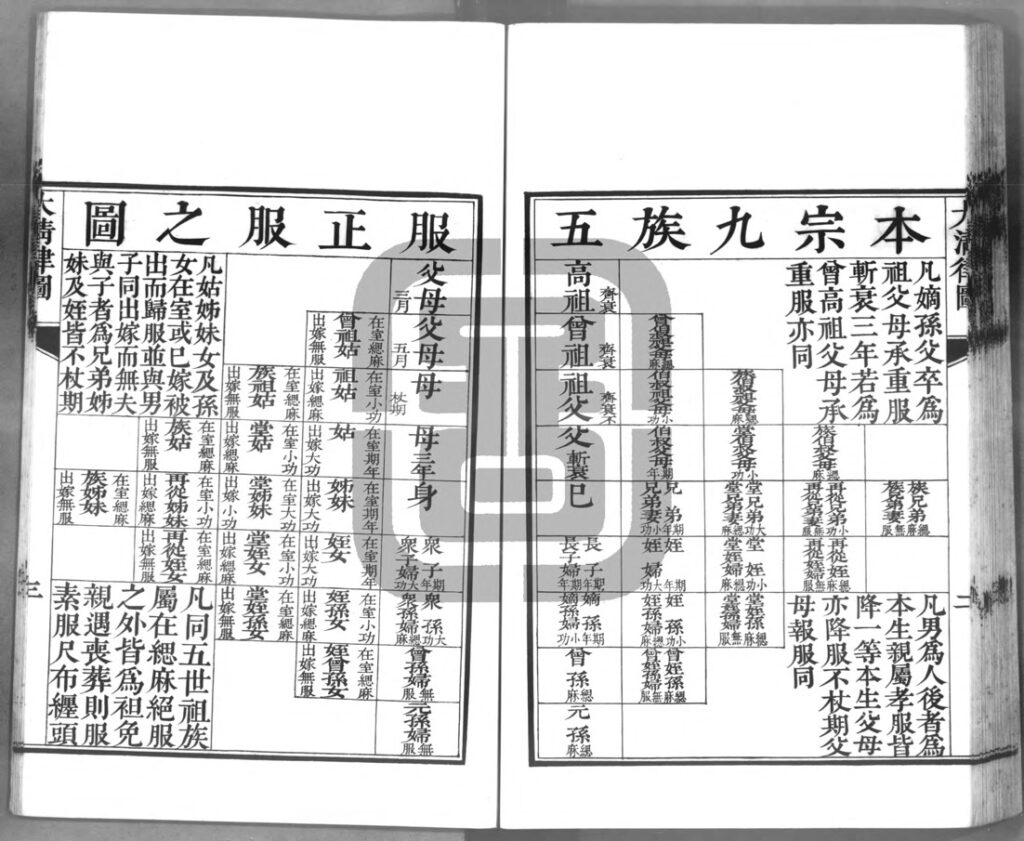
Lüxue (律学), or the traditional legal learning, was the technical and bureaucratic learning through which imperial law codes were interpreted and commented upon. During the decade-long preparation of PR China’s Civil Code, the codes of imperial China were regarded as the spiritual ancestors of modern Chinese codification and were therefore given renewed attention. At the same time, the Japanese scholarly tradition that has exerted a strong influence on China since the 1990s has also placed great emphasis on the reconstruction of traditional lüxue. Shaped by these two factors, lüxue once formed the central axis of Chinese legal history studies.
Although research on lüxue in 2025 is no longer as vibrant as it once was, some scholars continue to uphold this tradition. As Li Junqiang (No. 32) puts it: “As long as cases continue to arise, there is no need to worry that lüxue knowledge will lack heirs.”
(6) Modern Chinese Legal History (8 articles)
In this context, “modern China” refers to late Qing and the Republican periods, from 1840 to 1949. Compared with the relative reticence surrounding the legal history of the People’s Republic, and the conceptual distance that separates traditional China from contemporary legal terminology, this field allows Chinese legal historians to make fuller use of western legal concepts in discussing historical events. The legal history articles on modern China published this year also reflect several long-standing themes in the field: reflections on colonialism, translation, and the court operation. The latter two themes, in particular, are those through which Chinese legal historians most readily enter into dialogue with scholars of doctrinal law: The extensive translation practices of modern China provides fertile ground for approaches drawn from global history and the history of knowledge; meanwhile, the many complaints voiced by Chinese judges in the 1920s are surely ones that Chinese judges in the 2020s would also be willing to listen to.
(7) The Zones of Overlap (11 articles)
As noted above, You Chenjun has discussed the uncertainty surrounding the disciplinary identity of Chinese legal history since the early 2000s. The eleven articles published this year offer a vivid illustration of this condition. They can be divided into three groups, which correspond neatly to three already-established fields within Chinese historical studies: intellectual history, the history of property institutions, and the history of administrative institutions.
The articles by Shao Fang, Ma Teng, and Li Chengyu (No. 22, No. 46, No. 55) could easily be placed within the more competitive field of Chinese intellectual history, where one may assume they would be readily welcomed by colleagues there. Four articles (No. 13, No. 25, No. 35, No. 38) address traditional property institutions in early modern China, a topic that has long attracted strong interest in both Chinese history and Chinese legal history. To some extent, the literature shaping both disciplines comes from the same sources: Japanese and American Sinologists. Post-war Japanese Sinology was itself deeply influenced by legal scholarship, and many of its foundational figures had participated in custom surveys conducted by the Japanese occupation authorities in China during the Second World War. The land reform campaigns of the Communist Party of China further intensified their interest (Hatada, 1973). American scholarship on Chinese legal history, by contrast, has traditionally been closer to area studies and historic studies than to doctrinal law. Questions surrounding property institutions in early modern China were closely connected to debates on the sprouts of Chinese capitalism, and analytical approaches from American economics were widely introduced into this field (Alford, 1986).
Administrative institutions form both a foundational training in Chinese historical studies and a classic topic in legal history. The studies of administrative institutions constitute one of the four canonical areas of traditional Chinese historiography. Since nineteenth-century Japanese scholars began to describe Qing administrative manuals as “administrative law,” legal scholars have become increasingly involved in this field.
(8) The Chinese Legal Tradition and Chinese Legal Culture (17 articles)
Compared with previous years, year 2025 shows more clearly a shift in the narrative of Chinese legal history: the concepts of the “Chinese legal system” and “Chinese legal culture” are gradually replacing “Chinese legal history” itself. A total of seventeen articles, almost 30% of an already limited space for legal history, engage with these two concepts. This alone indicates that they represent the central concern of the field at present. In response to the perceived crisis of Chinese legal history, scholars have identified their path of renewal here: what they study is not a history that belongs merely to the “past,” but a living culture and a legal system that continues to exert influence. More importantly, this culture and legal system are understood as profoundly distinctive and specifically Chinese.
From this perspective, legal historians are less positioned as historians in the conventional sense and, borrowing Jan Assmann’s terminology, more as scribers who generate canon and cultural memory within the flow of tradition (Assmann, 1992). Through targeted remembrance of historical China, legal historians hope to participate in the reconstruction of an “independent system of legal knowledge” in contemporary China. I have discussed this most powerful current in Chinese legal history in greater detail in a separate blog post, where I examine why it has emerged and what it may mean for both our Chinese colleagues and our international peers.
Epilogue
These articles have passed through layer after layer of review before finally appearing in China’s leading journals. Some, though emerging from different contexts, are not far from the questions that concern their international counterparts. Others come from a different world of meaning. As a legal historian from China, presenting these voices here does not mean that I welcome every trend they represent. It means only that they are here.
For me, to look back on each scholarly tradition of Chinese legal history is also to recall certain people and classrooms. It brings back deeply embodied memories. Sounds and colours reach my conscious awareness before any judgement of reading or taste. When I stand before my international colleagues, it is precisely these embodied experiences that shape my overall attitude toward other traditions. The blogpost I have written here is therefore no more than a modest attempt to ferry something between two worlds of meaning.
A Habermasian public sphere presupposes a minimal and universalist form of “understanding”. But what happens when the very basis of understanding is fragile from the beginning? In a recent article, the Guardian columnist George Monbiot argues for an attitude of “radical listening”: “Being heard is valuable in its own right. Loneliness and alienation, as well as being the feedstock of fascism, are major causes of human misery.” This is true of a democratic society. It is also true of the public space of an international scholarly community.
This essay is therefore more like an invitation extended to our international colleagues: let words from another world of meaning strike your retina, challenge the limits of your understanding, and open new possibilities for global legal history. If Chinese scholars can discuss Habermas and Luhmann’s systems theory at forums in Shanghai, then it should not be too much to expect that we might discuss China’s current and vigorous project of an “independent knowledge system” here in Frankfurt.

References
Alford, William P. “The Inscrutable Occidental? Implications of Roberto Unger’s Uses and Abuses of the Chinese Past.” Texas Law Review 64, 1986, 915-972.
Assmann, Jan. Das kulturelle Gedächtnis: Schrift, Erinnerung und politische Identität in frühen Hochkulturen. München: C.H. Beck, 1992.
HATADA, Takashi (旗田巍). Chinese Villages and Community Theory [中国村落と共同体理論]. Tokyo: Iwanami Shoten, 1973.
KOYASU, Nobukuni (子安宣邦). How Have the Japanese Spoken of China? [日本人は中国をどう語ってきたか]. Tokyo: Seidosha, 2012.
Cite as: Ku, Haochen: What were Our Chinese Colleagues Writing in 2025?, legalhistoryinsights.com, 07.07.2026, https://doi.org/10.17176/20260824-125023-0
