


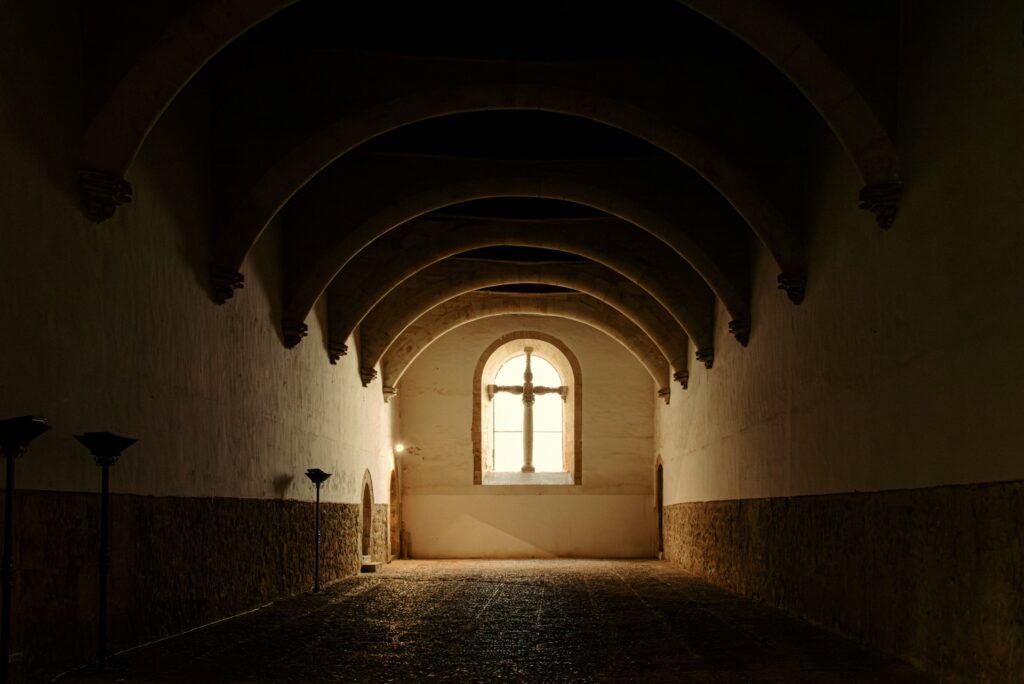
Rows of tiny rough wooden benches, accompanied by small narrow desks with centuries of students’ inscriptions and drawings carved into them for eternity. Bare walls, no heating (even nowadays, and February is a cold month in Salamanca), a small window with dull winter light filtering in and classes starting at 7 o’clock in the morning. The cold was so extreme that rich students are believed to have sent their servants in advance to warm their seats for them (hence, the saying “calentar banco” in Spanish). Those not so lucky had to put up with cold temperatures and chattering teeth. All for the sake of attending the lectures of Francisco de Vitoria, who himself was probably perched on the small lectern at the front. That is how the School of Salamanca began 500 years ago.
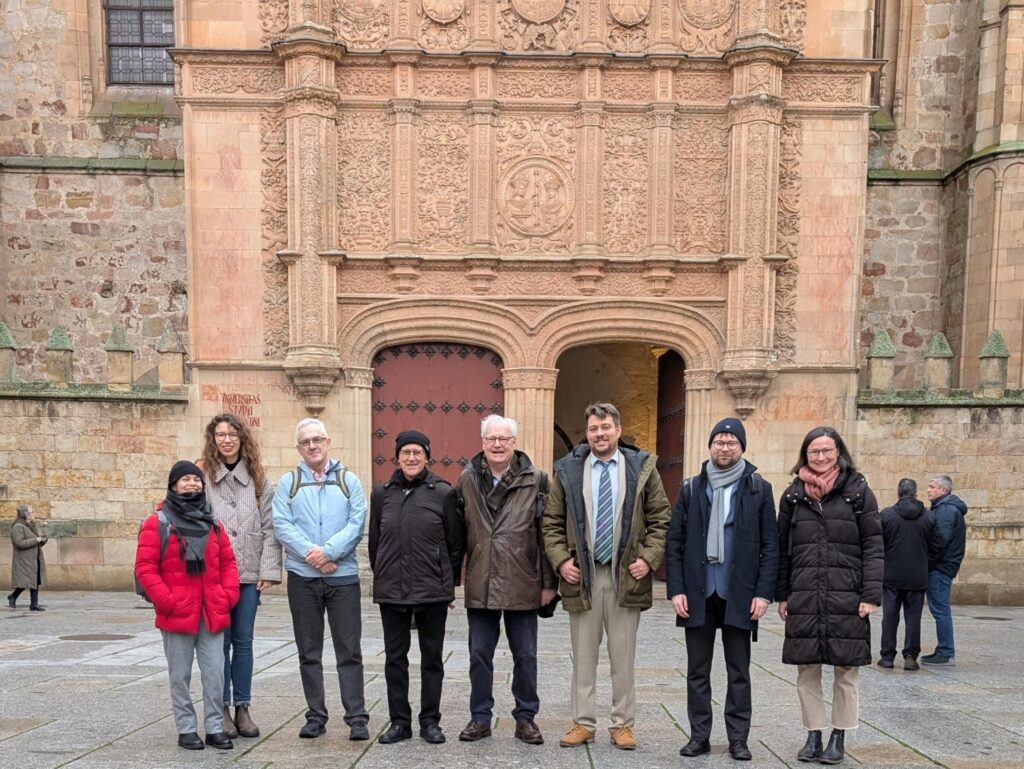
That is also how we, the project The School of Salamanca, happened to find ourselves in the academic hometown of many of our authors: participating in the congress dedicated to the 500th anniversary of the School, but, of course, also getting back to the roots and seeing how the School of Salamanca came to be in all its material aspects.
The School of Salamanca was an intellectual movement in Spain during the sixteenth century and early seventeenth century. But what remains of it, and does it still matter for the challenges of our present and future? This was the central theme of the congress marking the fifth centenary of Francisco de Vitoria’s appointment to the cátedra de prima theologia at the University of Salamanca in 1526. The international congress, running for an entire week, from February 9-13, and consisting of 35 panels, was wonderfully organised by María Martín Gómez, Idoya Zorroza and David Jiménez in collaboration with other colleagues from the University of Salamanca, the Pontifical University of Salamanca and the Pontifical Faculty of Theology San Esteban. Despite a very full program, the team also made it possible to include a rich cultural offer to accompany the intellectual exchange. Overlapping panels, including those presented online, however, made it impossible to attend all sessions, many of which sounded highly interesting. For this reason, the following congress report highlights our favorite takeaways and is therefore necessarily selective and subjective.
Past – Was There a ‘School of Salamanca’?
At first glance, the School of Salamanca seems like a clearly identifiable intellectual movement rooted in sixteenth-century Spain. However, closer inspection reveals a more complicated picture. Historians and philosophers continue to debate whether it ever existed as a “school” in the strict sense—an institution with shared doctrines, methods, and membership—or whether it is better understood as a retrospective label imposed on a diverse set of thinkers.
Traditionally, the School is associated with figures such as Francisco de Vitoria and Domingo de Soto, whose lectures and writings at the University of Salamanca shaped discussions on theology, law, and moral philosophy. Their methodic clarity in the exposition and comments on Aquinas Summa theologiae, introduced by Vitoria in Salamanca in 1526, soon profiled him as a renewer of the scholastic theology, and created a following among students and scholars, first and foremost among the Dominican friars of the Convent San Esteban. At least that was the perception of Domingo Báñez while reconstructing the intellectual genealogy of the School, according to José Angel García Cuadrado. In his closing remarks to the conference, Juan Belda Plans reaffirmed this traditional perspective by emphasizing what he termed the theological vocation of the School. He called on the audience to carry forward Vitoria’s spirit of doing theology, namely, the use of rational and speculative discourse to address vital and practical questions within a biblical and patristic framework. At the same time, the congress highlighted the need to move beyond this narrow canon. The inclusion of transatlantic figures such as Alonso de la Veracruz underscores that what we call the School of Salamanca was not confined to a single place, but extended into the intellectual life of the Spanish Empire, focusing on the contribution of Latin American spaces of thought.
Moreover, the so-called School was never limited to one discipline. Its members—or those later grouped under this label—engaged in theological debates about moral responsibility, juridical arguments about the rights of indigenous peoples, philosophical inquiries grounded in Aristotelian-Thomist traditions, and economic reflections on value, price, and money. Rather than a unified doctrine, we find a multidimensional field of inquiry, in which the ratio theologica or philosophica operate as interwoven modes of reasoning, as Ricardo de Luis suggested in the final panel.
This plurality also implies disagreement. On key issues such as the legitimacy of conquest, the conditions of just war, or the status of non-European peoples, Salamanca thinkers did not speak with one voice. As emphasized in the congress discussions the School of Salamanca may be better understood as a space of intellectual dispute rather than a coherent system.
Present – Why Does the School of Salamanca Matter Today?
What exactly are scholars seeking when they return to the Salamanca School: historically grounded ethical insights that can inform contemporary debates, a conceptual framework reshaped to fit modern and postmodern categories, or a polyphonic phenomenon illuminated in its own original intellectual context? The enduring appeal of the School of Salamanca lies in its apparent engagement with issues that continue to shape our world: colonialism, global justice, economic ethics, and international law. Yet this relevance is not straightforward. It depends on how we interpret early modern concepts in light of modern categories.
A central methodological challenge is the risk of anachronism. Can we meaningfully compare sixteenth-century discussions of empire with contemporary debates on racism or colonialism? Are the underlying problems the same, or do they only appear similar because we project our conceptual frameworks onto the past? These questions do not undermine the relevance of the School of Salamanca; rather, they define the conditions under which it can be meaningfully engaged.
In the context of colonial expansion, Salamanca thinkers famously addressed the rights of indigenous peoples and the legitimacy of Spanish rule. Their arguments have often been read as early critiques of imperial domination. At the same time, they operated within—and did not fundamentally reject—the structures of the empire. This ambivalence makes them both a source of criticism and a subject of it.
A similar tension appears in economic thought. The Salamanca authors developed sophisticated reflections on just price, market exchange, and monetary practices. While they are sometimes portrayed as precursors of modern capitalism, such interpretations risk oversimplification. Their primary concern was not the promotion of markets, but the moral evaluation of economic practices. “In this little treatise, I did not wish to be a preacher, but a doctor; not a fluent and elegant rhetorician, but a moral theologian, clear and concise” (Tomás de Mercado, 1569). Prices and contracts were to reflect fairness and true value, while profit was legitimate only when it did not harm others or violate moral norms. Economic practices were assessed according to human dignity and the welfare of communities, prohibiting exploitation, usury, and unjust enrichment.
Perhaps the most significant conceptual bridge to the present is the idea of international law grounded in natural law. As highlighted by Matthias Lutz-Bachmann, natural law provided a normative framework aimed to articulate universal principles of justice, with Francisco de Vitoria playing a decisive role in what can be understood as a paradigm shift and the formulation of key modern distinctions. At the same time, Lutz-Bachmann warns that international law today appears increasingly non-binding for politicians, raising the danger of a genuine anarchy of states. Whether such a framework like natural law can still function in pluralistic and secular societies remains an open question—but it is precisely this question that keeps the School of Salamanca relevant.
From this perspective, the value of Salamanca lies less in providing ready-made answers than in offering a historically grounded way of asking questions. As Virginia Aspe has argued, the School of Salamanca can be understood as an “alternative project of modernity”—one that differs from the trajectories associated with Protestant and British traditions. Engaging with Salamanca thus opens a space for rethinking modernity itself.
This is particularly striking when we consider the historical context in which Salamanca thinkers operated. They were confronted with profound transformations: the encounter with the Americas, the upheavals of the Reformation, and the emergence of new political and economic structures. In this sense, their situation bears a structural resemblance to our own, marked by globalization, political fragmentation, and crises of normative order.
Future – What Lies Ahead for Research on the School of Salamanca?
If the past of the School of Salamanca is contested and its present relevance conditional, the future of its research remains open. While no clear predictions can be made, several challenges and opportunities are already visible.
One of the most pressing tasks is the preservation and accessibility of its sources. Much of the Salamancan corpus remains difficult to access, scattered across libraries and often available only in early modern editions. The digitization of these texts is therefore not merely a technical issue, but a prerequisite for ensuring that Salamanca remains a part of an active scholarly discourse. In a digitalized world, visibility depends on accessibility. That is why the primary task of our project is digitizing the School’s sources and making them accessible. This includes full texts and digital copies of central texts of the authors of the School, as well as important reference works on which the Salmantine authors relied when writing their books.
Closely related to this is the globalization of Salamanca studies. The inclusion of Latin American perspectives, already emphasized at the congress, points toward a less Eurocentric understanding of the field. Future research will likely depend on transnational collaboration and interdisciplinary approaches.
Meanwhile building on recent scholarship, two concepts borrowed from the history of knowledge and sociological studies have been applied to the School of Salamanca. Understanding the School of Salamanca as an “epistemic community” and a “community of practices” reframes it as an intellectual network that produced legal, moral, and economic normative knowledge across Europe, the Americas, and Asia. This methodological approach offers promising perspectives for research, as it enables scholars to analyse how knowledge, methods, and norms are produced and transmitted collectively. Members of this community shared methods, sources, and styles of argumentation, allowing them to address questions of justice, commerce, and human conduct in a consistent way of pragmatic reasoning.
At the conceptual level, the challenge is to determine whether and how Salamancan ideas can be translated into contemporary debates. Can natural law be reformulated in a way that speaks to pluralistic societies? Can early modern reflections on global order contribute to current discussions on international justice, postcolonial critique, or the ethics of war?
Ultimately, how the School of Salamanca is remembered will depend on the ability of the historical research on it to remain intellectually productive. This requires not only scholarly rigor, but also a willingness to engage with broader audiences and contemporary concerns.
Conclusion
Five hundred years on, the School of Salamanca resists simple characterization. It was not a fully unified “school” in its own time, yet it has become a powerful point of reference in ours. Its present significance lies not in offering definitive solutions, but in framing enduring questions about justice, law, and global coexistence.
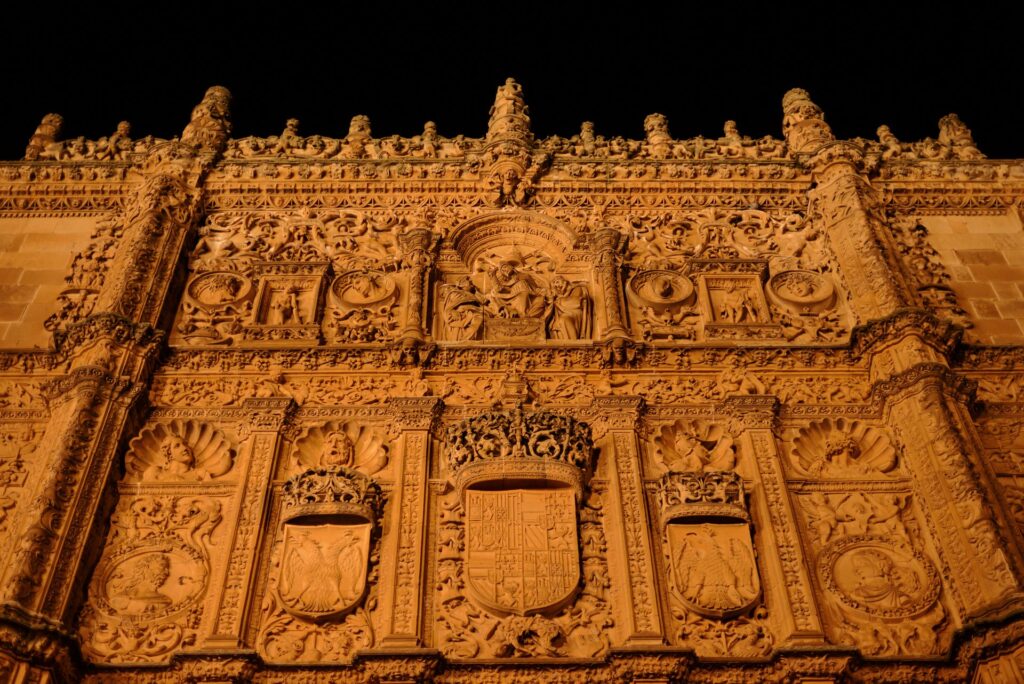
In this sense, its legacy is neither fixed nor exhausted. It is continuously reinterpreted—shaped by the concerns of each generation that returns to it. The challenge, and the opportunity, is to ensure that this engagement remains both historically informed and critically aware. As the intellectual legacy of the Salamancan authors lives on, our project continues to make its contribution to it by making its primary works accessible and searchable as well as by building up a dictionary of the main terms of its juridical-political discourse. After coming in touch with the city and seeing the School’s birthplace for ourselves, we continue our work with a new perspective and a deeper understanding of historical and material context, in which these works were created.
Cite as: König, Florian/Soler, Ana Isabel/Solonets, Polina: Past, Present, and Future of the School of Salamanca. A Congress Report on its Fifth Centenary, legalhistoryinsights.com, 11.06.2026, https://doi.org/10.17176/20260624-155445-0
