


About twenty years ago, when I first began studying slavery from a global perspective, I came across some of the most fascinating stories I could imagine, and what struck me about them was that, when placed side by side, they didn’t quite add up. Today, however, I believe it is possible to move beyond the contradictory approaches within the field by revisiting its foundations through the lens of normativity.

Slavery as Property
Historians often remark that slavery was almost as easy to find around the world as the shade of trees, appearing throughout human history as if stood outside the passage of time. The introduction to The Cambridge World History of Slavery (2011), a vast and prestigious four-volume collection of essays about slavery, the editors David Eltis, Stanley Engerman, Keith Bradley, and Paul Cartledge addressed their readers in precisely these terms, with the unmistakable confidence of a settled truth:
Slavery has been among the most ubiquitous of all human institutions, across time and place, from earliest history until, some would argue, the present day. Yet its durability and ubiquity are not widely recognised and, where they are, they seem poorly understood by the general public and scholars alike (Eltis et alii, 2011: 10).
A few lines later, the same authors add that slavery is defined by ownership relations – when humans treat other humans as property: “The most decisive of these [aspects] is the ownership of one human by another, and the ability to buy and sell the human chattel such ownership creates.”
A curious claim, especially coming so neatly after the previous one.
For both statements to hold, we would have to accept that the Botocudos of the Rio Doce Valley in Brazil before the European Conquest, the Inuit of Alaska, the Romans of the Twelve Tables, or Tang Dynasty China bought and sold human beings within an economic exchange system equivalent to the market economy. It is an idea that goes down all too easily: it is easy to propose, and even easier to accept, especially given how readily we take our own contemporary economy to be the rational endpoint of history. No wonder it has been successful.
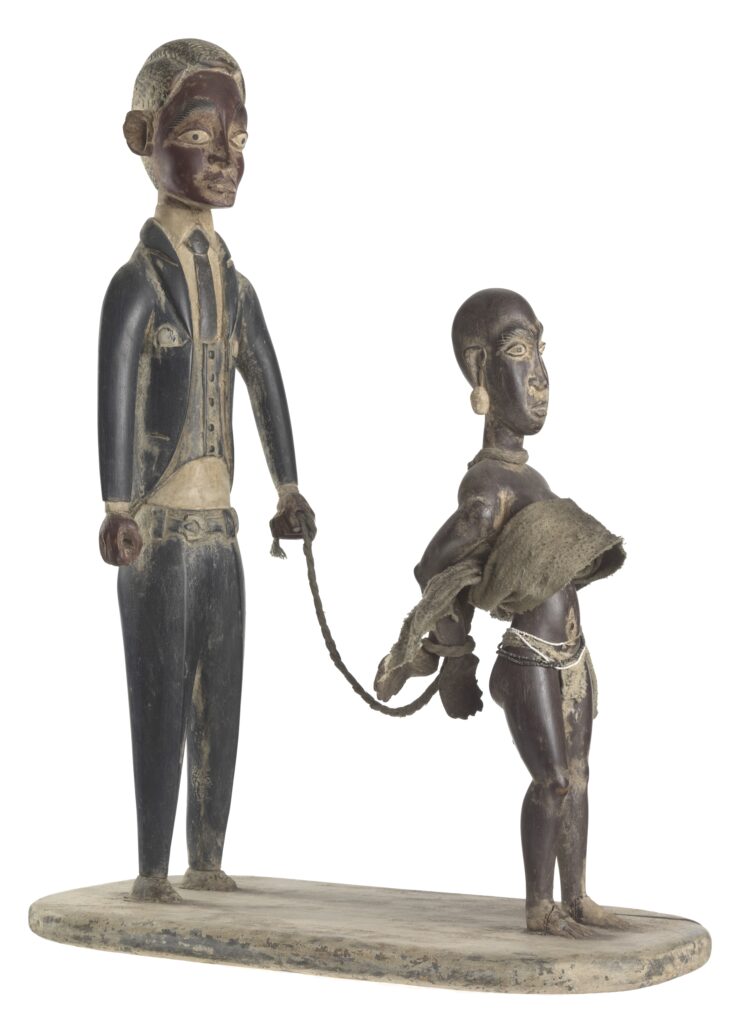
Slavery as Outsiding
Anthropologists, however, trained to distrust their own assumptions, pushed back. A definition of slavery so narrow and culturally specific could hardly account for a practice spread across so many times and places. Instead, they proposed understanding slavery as a process of “outsiding”: the removal of people from their original protective networks (family, clan, kinship ties, community, state) and their exposure, now vulnerable, to violence, exploitation, constraint, and dishonour. Broader and far older than any legal definition of property, this anthropological notion of outsiding captures the wide cultural variations of enslavement while making it possible to construct a global account of the institution (Miers and Kopytoff, 1977; Parron, 2026).
As outsiding presupposes a certain degree of dehumanisation, some Iberian languages – Spanish, Portuguese, Catalan – offer a particularly evocative term for the process: desterramento, destierro, desterrament. Literally, these words mean “to remove someone from their land,” where land can also signify, metaphorically, one’s place of belonging (family, clan, community). Since the word human derives from the Latin humus (soil, ground, region) – meaning “made from the soil” – desterramento carries the powerful suggestion of dehumanisation through the severing of those networks of belonging. At a deeper level of etymology, desterrar comes close to a direct transposition of dehumanise. The term gets closer to the heart of the problem than its direct alternatives available in German (Verbannung, Ausgrenzung), French (exil, banissement), Italian (esilio, emarginazione) and even English (banishment). It also resonates, albeit with a different texture and concreteness, with what philosophy has conceptualized as déterritorialisation (Deleuze and Guattari: 1995-1997). Yet, as English is the lingua franca of global academia, outsiding may be chosen as the term which communicates the concept better than desterramento.
Historians did not take the proposition well. They dismissed the anthropologists’ slaves as “pseudo-slaves” and doubled down on property as the essential ingredient of slavery (Finley, 1980). Faced with this dichotomy, many scholars today operate within a familiar either/or logic. They either adopt the anthropological definition of enslavement as outsiding or they take the legal definition of slavery as property, and build their research accordingly. As so often happens in such binary setups, a third position emerged: the sceptics (Eltis, 2025). They shrug off the whole debate, suggesting that the definition of slavery sounds like the alchemists’ disputes over the nature of gold: extremely rich and utterly useless.
Slavery as Transnormativity
But what if we see these two views as describing distinct moments within the same process? As layers of reality that interlock, forming chains of outsiding that produce vulnerable people who, depending on circumstances, may become the property of others?
History shows that all human groups we intuitively recognize as slaveholding – that is, those who reduced humans to property – relied on translocal networks that supplied a steady flow of vulnerable people produced through outsiding. From the fragmentary evidence of Babylon to the more solid record of Greece in the Eastern Mediterranean – and from there to the Roman Empire, the vast Islamic world, and the conquest of the Americas – enslavement depended on encounters, often collisions, between cultures that did not interpret outsiding in the same way. For some, outsiding could be temporary, for others reversible; for others still, it carried limited implications for dehumanisation. In this manner, any group that turned humans into property had to translate this plurality of outsiding normativities into its own: one in which the human being is reduced to the status of property and commodity.

It is not difficult to see that the slavery we recognize as such emerges within translocal networks of transnormativities, in which individuals rendered vulnerable under different normative orders are converted into permanent property, subject to use, abuse, alienation, transmission, inheritance, and sale. And since, in historical terms, the conversion of displaced humans into property is more recent and more restricted than practices of outsiding, we can say that slavery takes shape by colonizing deeper, broader, and older human realities: slavery is not only transnormative but also multitemporal. Even if the space we study seems to offer a clearly bounded regime of normativity and historical time – colonial Brazil, the late medieval republic of Venice, the island of Chios in Antiquity – its conditions of existence remain transnormative and multitemporal.
Global History of Slavery: A New Agenda
Recast in these terms, the global history of slavery places normativity at the centre of the equation, and in doing so, opens up a new research agenda. All the available evidence points to the Greater Mediterranean Basin as the space where outsiding and the reduction of humans to property came together most durably and intensively, forming an immense intercontinental, transcultural, multilingual, and multireligious area bound together by circuits of exchange and power that, at its widest extent, stretched from the Iberian Peninsula and Northwest Africa to the far edges of Persia and beyond (Braudel, 2023; Horden and Purcell, 2000). Slavery as we (re)recognise it, is not a problem “within Western civilization,” as David Brion Davis’s classic The Problem of Slavery in Western Civilization (1988) would have it, nor is it a “European creation” (Hespanha, 2007). Nor, for that matter, is it a global institution– despite the title of a well-known publication in the field, Journal of Global Slavery. Rather, it is the outcome of the globalisation of a system historically and geographically situated in the Greater Mediterranean Basin (Parron, 2026).
The key question then is whether there were shared normative foundations that helped give the Mediterranean its historical specificity as the largest world region of enslavement. From this follow a series of further questions.
If, for example, relations of outsiding take on distinct cultural meanings, when and where in the Greater Mediterranean Basin do we first see signs that people were aware of transcultural normative chains of enslavement? A close reading of Aristotle suggests that he was aware—but were there earlier repertoires? And how might we identify and interpret them?
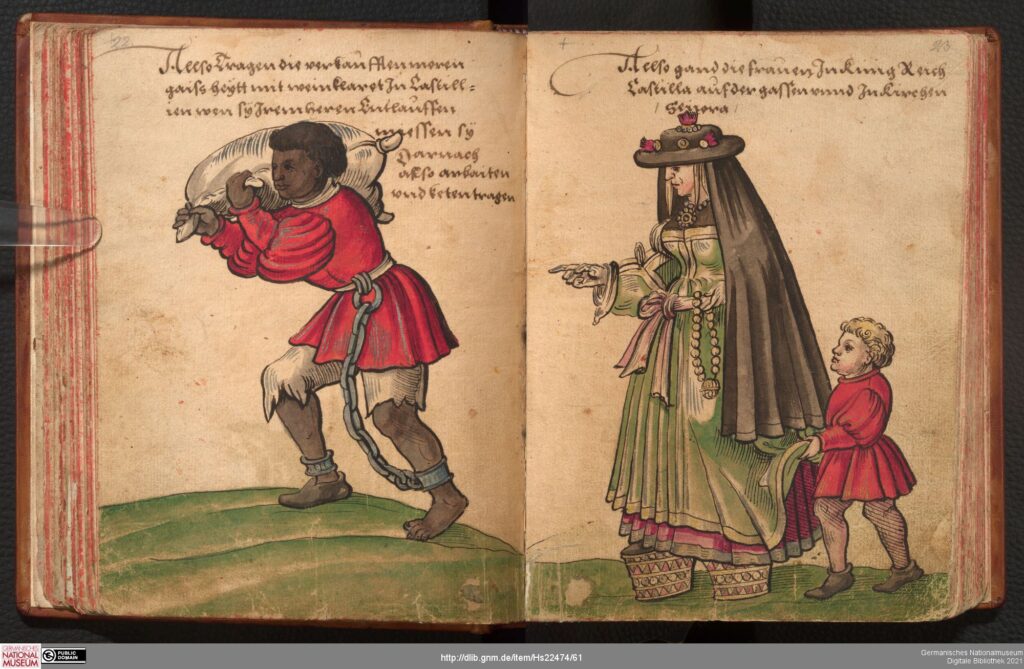
We might also ask when Mediterranean enslaving societies – those that imported humans as property – began to translate outsiding practices into their own legal and normative categories. The Romans did so in their own way, as we learn from the Digest and the Institutiones of the Corpus Iuris Civilis. But how did this issue unfold in theology, moral philosophy, and law across the rest of the Mediterranean, including in the Byzantine Empire and the Islamic world?
No less relevant is the question of how far the Islamised Mediterranean – alongside the Roman era, the greatest absorber of enslaved people in the region’s very long history – developed its own categories and reflections to make sense of the normative tensions embedded in transcultural chains of outsiding and enslavement. Did Muslims and Christians view those chains differently across their respective frontiers between the seventh and sixteenth centuries? What similarities and differences can we identify? What forms of mutual influence can we trace? How did ideas and practices circulate within and between them? At this point we are a long way from the mainstream view of some scholars, for whom “slavery is a figure of Roman law” and “naturally regulated by European jurists” (Hespanha 2007: 65). The received approach is a telling case of undue conflation: it takes the history of enslavement for the history of law and reduces the history of slavery’s normativity to the history of the reception of its positive law.
As many historians have noted, the history of the Mediterranean is the history of its expansion. At what point in this process did networks of outsiding – from which slavery cannot disentangle itself – began to command sustained attention, becoming objects of closer observation and deeper inquiry for enslaving societies? When, how, and why did moral philosophy, law, and canon law begin to take shape as a kind of ethnography of outsiding practices, seeking to retrace the normative chains of enslavement that extended beyond the frontiers of slaveholding societies?
Today it seems to me that the conquest of the Americas and the rise of European overseas empires – the Mediterranean’s final extension – reshaped the very normative conditions under which slavery operated, pushing it at once to its peak and to the edge of crisis. The reason is simple. The most ambitious intellectual project in the history of slavery – the attempt to globalise the normative framework for chains of outsiding across the world – ultimately revealed its deepest limits: that such a translation could not take place without a great dose of violence and arbitrariness against the communities from which vulnerable people were drawn: Indigenous peoples, sub-Saharan Africans, Asians of all kinds. Enslaved people, missionaries, theologians, lawyers, and jurists came to see, often with difficulty, that slavery was not a universal institution grounded in a universal language. For many, contact with different peoples and cultures laid bare the fragile normative foundations of enslavement forged over the multimillennial history of the Mediterranean, opening a crucial flank through which the institution faced its first categorical attacks.
This way of rethinking the global history of slavery brings into a single frame realities that are usually told apart: the enslavement of Indigenous Americans, of Black Africans, and of Asian peoples. The normative knowledge surrounding these processes did not evolve in isolation; they shaped one another. And yet we still know surprisingly little about how these exchanges took place. Part of the problem lies in the academic hyper-specialisation that slices history into the meta-geographies of area studies: supposedly self-contained regions (Latin America, North America, Europe, Africa, Middle East, Southeast Asia) that reflect more the geopolitical map of the present than the lived unity of the past.
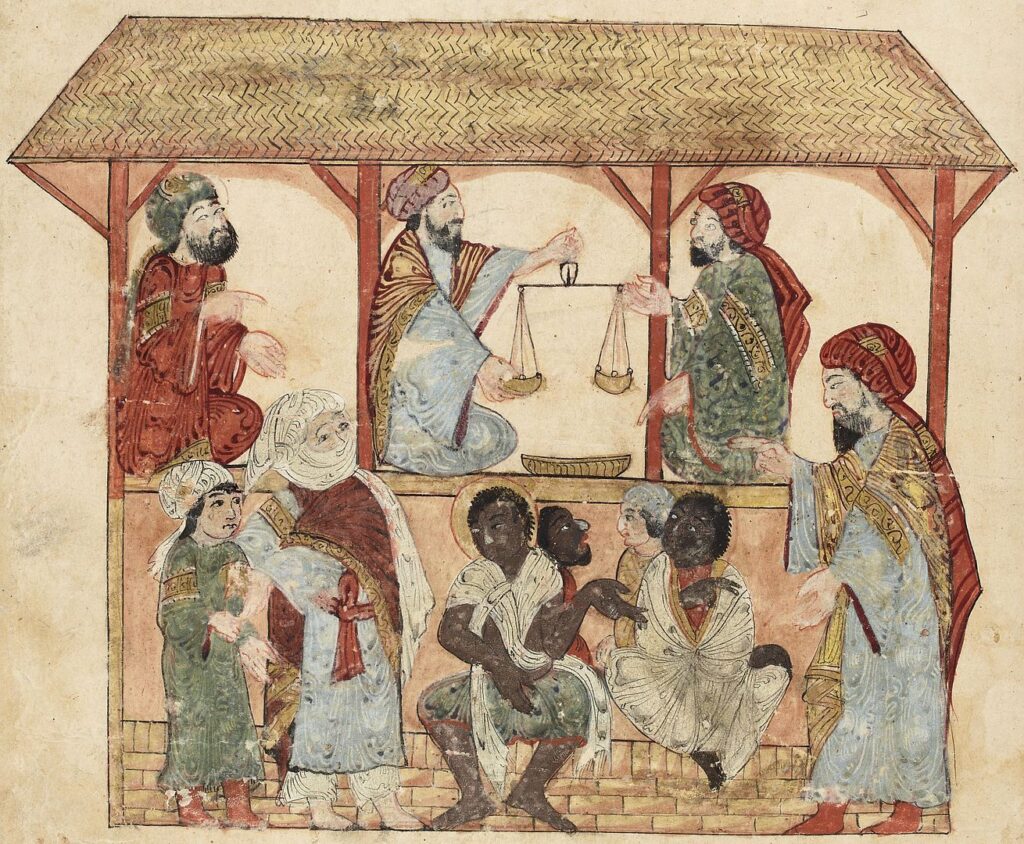
Another crucial line of inquiry reshaped by this perspective concerns the historical origins of abolitionism. In Anglo-American narratives, the question is often framed in familiar terms: how could an institution said to be universal and timeless, present in virtually every human society, collapse within little more than a century? The answer is just as familiar: before the eighteenth century there was nothing, only darkness, until the Big Bang of abolitionism, made possible by the peculiarities of English civil society (Drescher: 2009). Without a doubt, a poor answer to a poorly framed question. Treating the history of anti-slavery normativity before the eighteenth century as if it did not exist can only reflect a parochial projection of false universalisms. If English society created the institutional conditions for the emergence of abolition, the normative and conceptual foundations of categorical anti-slavery were forged on the global arena of history.
***
Much of this work still remains to be done, not least because certain Baconian idols continue to dominate the field of historical studies, blocking the advance of new research agendas. One of the most cunning is the idol of historicism, a small but persistent demon that slices the past into Ancient, Medieval, Modern and Contemporary History, erasing the cumulative force of the long durée in favour of rupture and discontinuity. Another no less powerful idol is that of meta-geographies, which divides history into artificial containers, preventing us from seeing the Mediterranean as a transcivilisational unit. A third idol is the Eurocentric, or Americentric, ontology that elevates 18th and 19th century Euro-American slaveholding societies into the benchmarks for observing the world, turning a particular endpoint in history into a universal starting point of analysis. These are not merely habits of mind, but forms of knowledge deeply institutionalised into academic regimes of truth.
Meanwhile, the pluricontinental reality of the Mediterranean, the main world region of enslavement across the ages, awaits the history of its normativity. A history that refuses easy solutions until it is expanded to its proper scale.
Bibliography
Braudel, F. (2023). The Mediterranean and the Mediterranean World in the Age of Philip II. 2 vols. Berkeley: University of California Press.
Davis, D. B. (1988). The Problem of Slavery in Western Culture. Oxford: OUP.
Deleuze, G. e Guattari, F. (1995-1997). Mil platôs: capitalismo e esquizofrenia. São Paulo: Editora 34, 5 vls.
Drescher. S. Abolition: A History of Slaver and Antislavery. Cambridge: CUP, 2009.
Eltis, D. et alii., eds, The Cambridge World History of Slavery. Cambridge: CUP, 2011, vol.1, p. 10.
Eltis, D. (2025). Atlantic Cataclysm. Cambridge: CUP.
Hespanha, Antonio Manuel. (2007). Depois do Leviathan. Almanack, 5, 55-66.
Horden, P., and Purcell, N. (2000). The Corrupting Sea: A Study of Mediterranean History. Oxford: Blackwell Publishers.
Miers, S. and Kopytoff, I. (1977). African Slavery as an Institution of Marginality. In: S. Miers and I. Koptoff, eds., Slavery in Africa: Historical and Anthropological Perspectives. Madison, WI: University of Wisconsin Press, pp. 1-81.
Parron, T. (2026). Slavery in Capitalism: a Deep History. Cambridge: CUP.
Cite as: Parron, Tâmis: Normativities of Slavery: A Global History, legalhistoryinsights.com, 08.02.20256, https://doi.org/10.17176/20260511-142622-0
