


The 2nd Meeting of the Max Planck Partner Group “The Production of Knowledge of Normativity and the Early Modern Book Trade” took place at the University of Barcelona in June 2025. You can read about the 1st meeting here.
It is boiling hot in Barcelona. The air is salty and warm. After some delay with our very early flight from Frankfurt, we have finally arrived at our destination: the Faculty of Information and Audiovisual Media at the University of Barcelona. Neither the beautiful architecture of Gaudí, nor a well-planned gastronomical tour can get us side-tracked at the moment, as we have arrived here with a mission of the utmost importance: to meet with a group of like-minded and enthusiastic colleagues from all over the world, brought together in this place by the Max Planck Partner Group (and the main driving force behind it all, one Manuela Bragagnolo – this time wonderfully supported by the ‘Man in Barcelona’ of the Group: Pedro Rueda Ramírez). The group members investigate together how the printing press and the emergence of the early modern book trade impacted the production of the knowledge of normativity. In order to do so, we are looking at how legal books were produced, circulated and consumed at that time from an interdisciplinary perspective, combining legal history, book history, and the history of knowledge’s methods and questions.
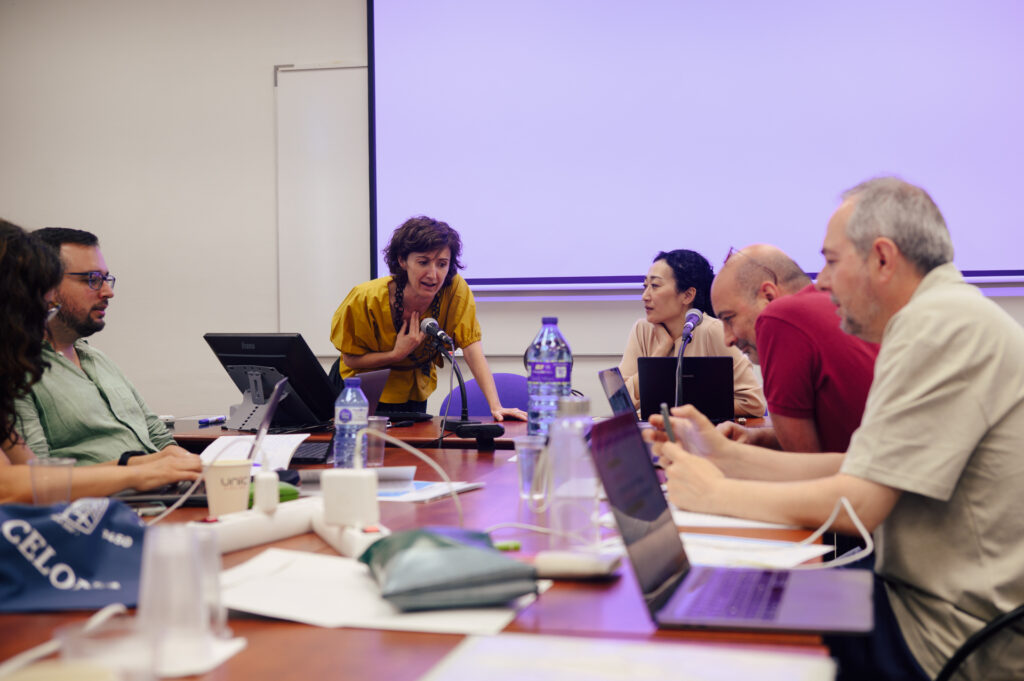
During our kick-off meeting in November 2023 in the snowy Trento, we focused on introducing our work and getting to know each other more as a group. Coming from different disciplines and places, we had to establish some common ground for our mutual investigations of the early modern printing world. Now that we know each other well, we do not waste any time – we are jumping straight in, ready to listen and discuss, this time focusing on three topics: “Spaces and Networks”, which is looking at the international circulation of both normative books and various actors involved in their printing, selling and distribution; on the interplay between “Authenticity, Authorship, and Authority” and how it influenced normative books , as well as their production and circulation; and on “Printing Technologies and Typographic Devices”, with a focus on what role materiality of the books played in the process (one such example from the group’s work is presented here). The format we are trying out for this workshop also helps to boost the discussion: some of us are presenters, and some of us are commentators. We all exchanged and read each other’s drafts beforehand and this preparatory work pays off immediately, as everyone is ready to contribute to the discussion, which is lively and thought-provoking for both the presenters and the discussants.
You can find the full workshop programme with all papers’ abstracts here. But let us take you through some of the highlights.
Spaces and Networks
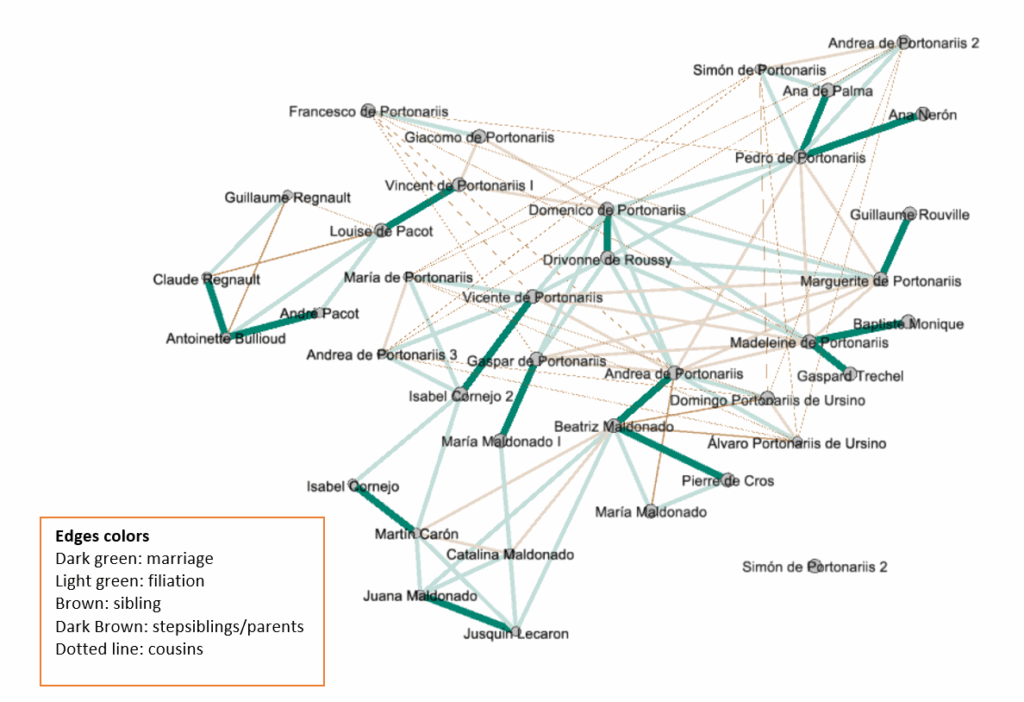
If we take the Partner Group perspective, the production of normative knowledge in the early modern period was physically centred around different geographical locations, where the normative books were printed: the prominent centres of production included, among others, Salamanca, Antwerp, Venice, and Lyon. One printing shop could be responsible for the production of a certain type of normative books for a certain market, and there were established circulation channels of books and people. Sometimes one book’s edition could get printed at different printers’ workshops in different geographical locations, as, for example, was the case with Luis de Molina’s De Iustitia et Iure (Birr & Solonets, 2025). In her presentation: “The Portonariis and the Production and Distribution of Law Book in the 16th Century”, Natalia Maillard Álvarez shows the case of the Portonariis family, who formed a network of prominent booksellers, printers, and publishers with their printing workshops situated at various geographical locations in Europe, such as Trino, Venice, Avignon, Lyon, Salamanca, Medina del Campo, Seville, and Zaragoza, and their business networks spreading out to the Low Countries, and to Mexico and Peru. Although law books constituted a significant part of their production, the Portinariis had different strategies for the production of such books depending on the location. Not only did the amount of law books produced in different printing centres differ significantly, but the character of the books themselves did too, as well as the technical intricacy and expertise required. Hopefully, the future work on the topic will let us learn more about the Portonariis’ strategies employed for printing of the normative books, as well as their distribution channels and target markets, through which we will be able to better understand what printing centres in their network produced what books for what markets. The use of digital humanities in general and network analysis in particular come in handy in this case and can let us uncover how this network operated.
Authenticity, Authorship and Authority
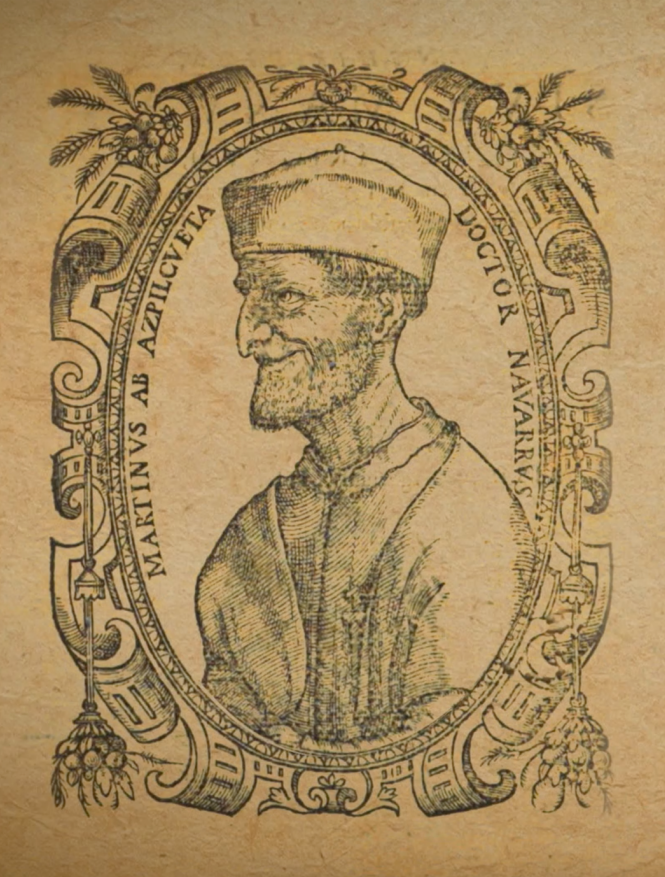
How could authors control the printing and selling of their books in the early modern time? Why was it especially important in case of laws and normative books, be it secular or religious normativity? What tools and practices were available to authors at that time to assert their authorship? Recent scholarship shows, for example, the crucial importance of printing privileges, which, on the one hand, ensured the doctrinal correctness of legal and theological texts, and, on the other hand, granted authors the exclusive right to control the printing and selling of their books. For example, Martín de Azpilcueta masterfully used the system of printing privileges to secure his control over the printing and distribution of the “Manual de Confessores” (Bragagnolo, 2024).
Another mechanism, also successfully employed by Azpilcueta, was the assertion of his legal authorship in court (Bragagnolo, 2024). But what other tools were available to authors at that time? As Manuela Bragagnolo shows in her presentation “Networks of Authorial Control. The Author, his Trade Agents, and the Production of Normative Knowledge in Early Modern Times”, signatures, together with the practice of signing book copies, could also have been employed as another tool to ensure the circulation and distribution of certified editions, checked and supervised by the author himself. By analysing Azpilcueta’s selling agents and their distribution channels, it could be possible to better understand the whole scope of the authorial control strategy employed by Doctor Navarro and to what extent signatures played a role in it. For that purpose, more copies of Azpilcueta’s Manual need to be studied.
Printing Technologies and Typographic Devices
The presentation by Yoshimi Orii, titled “Mission, Printing, and Universalization: Organizing Various Debates on the Historical Significance of Japanese Jesuit Letterpress Printing” shows how the Jesuits tried to use Western printing technology (the printing press) to establish the production of normative knowledge in Japan by printing the translation of important religious texts in Japanese, and what difficulties they faced when confronted with the need to perform the task in local cultural realities. Even though Japan and China at that time made wide use of woodblock technology, which was more cost-efficient and less labour-intense than adapting European technology to accommodate Japanese characters, the Jesuits refused to use the local production technology, due to the technology having strong ties with the production of Buddhist texts. The question of why they persisted in their attempts despite the obvious difficulties and forecast of failure is still open for debate: was it merely because of their wish for the universalization of individual handwriting styles, as some scholars argue, or was there was something more at play, like a need to establish a power dynamic by the subordination of a local custom.
Outlook
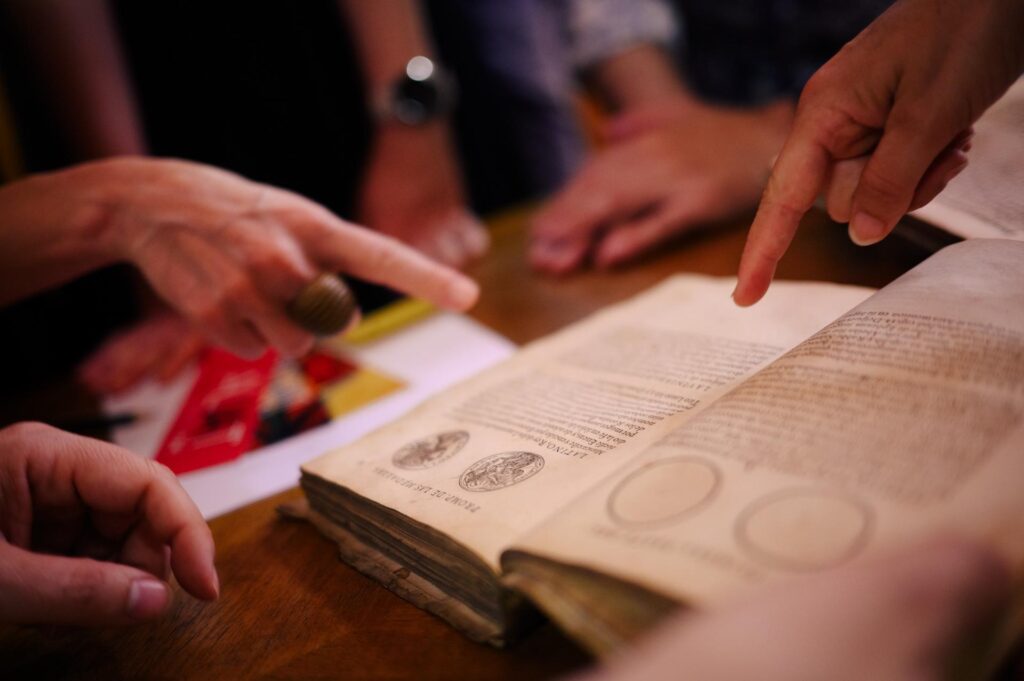
After two days of discussions of how normative books and the communities around them worked in the early modern period, we are all full of ideas and inspiration. (And we got even more inspired by exploring the wonderful collection of legal books at the Barcelona Bar Association Library, guided by Pedro). There is a lot left to do: we need to prepare ourselves for the next meeting of the Partner Group in Toledo in January ‘26. We also need to start envisioning how our research endeavours will come together, be it in the form of a book or some other type of publication, which of course also brings with itself a lot of practical questions for our deliberation. But our reading lists with books on the topic have grown, and there are new ideas we want to try out for our own research and new questions to answer: we are still on the way to deciphering the mysteries of early modern normative books.
References:
Birr, C. & Solonets, P. (2025). From Paper to Screen: Lessons from the Digital Edition of Luis de Molina’s De Iustitia et Iuere. Legal History Insights.
Bragagnolo, M. (2024). “Books and the Production of Knowledge of Normativity in the Early Modern Period: The Case of Martín de Azpilcueta’s Manual de Confessores“. In The Production of Knowledge of Normativity in the Age of the Printing Press. Leiden, The Netherlands: Brill | Nijhoff.
Bragagnolo, M. (2024). “Legal Authorship in the Age of the Printing Press: Manual de Confessores by Martín de Azpilcueta (1492–1586)“. In The Production of Knowledge of Normativity in the Age of the Printing Press. Leiden, The Netherlands: Brill | Nijhoff.
Maillard Álvarez, N. (2024). “Professional Book Trade Networks and Azpilcueta’s Manual in 16th-Century Europe“. In The Production of Knowledge of Normativity in the Age of the Printing Press. Leiden, The Netherlands: Brill | Nijhoff.
Feature image © Christiane Birr
Cite as: Bragagnolo, Manuela/Birr, Christiane/Solonets, Polina: Knowledge of Normativity and Printing Technologies. Networks, Authenticity, Typographic Devices, legalhistoryinsights.com, 09.10.2025, https://doi.org/10.17176/20251022-125407-0
