

A journey through scattered records, Indigenous diplomacy and the people who kept vanished archives alive.
When an Archive Becomes a Spectre
Archives are ordinarily imagined through their material weight -as buildings, storage spaces, and accumulated records- yet they can also embody disappearance. They preserve evidence against time while remaining vulnerable to destruction, dispersal, reclassification, and neglect. A vanished archive is therefore not necessarily wholly lost. Mentions of them within correspondence, legal papers, inventories, images, or oral testimony may reveal what was once contained, how it was used, and how it changed. Such traces permit partial reconstruction, one record or more at a time, while reminding historians that archives have always been incomplete and unstable.
This blog will examine “phantom archives”: repositories that no longer possess a physical presence but survive through scattered traces, references, copies and memories preserved in other collections.
Any reconstruction of these “phantom archives” must address not only the contents but also the transformations, uses, and custodians. It must look beyond their absences to explore their stories. It must combine documentary evidence with cautious imagination, without concealing the uncertainty produced by archival silences.
A Lost Indigenous Archive
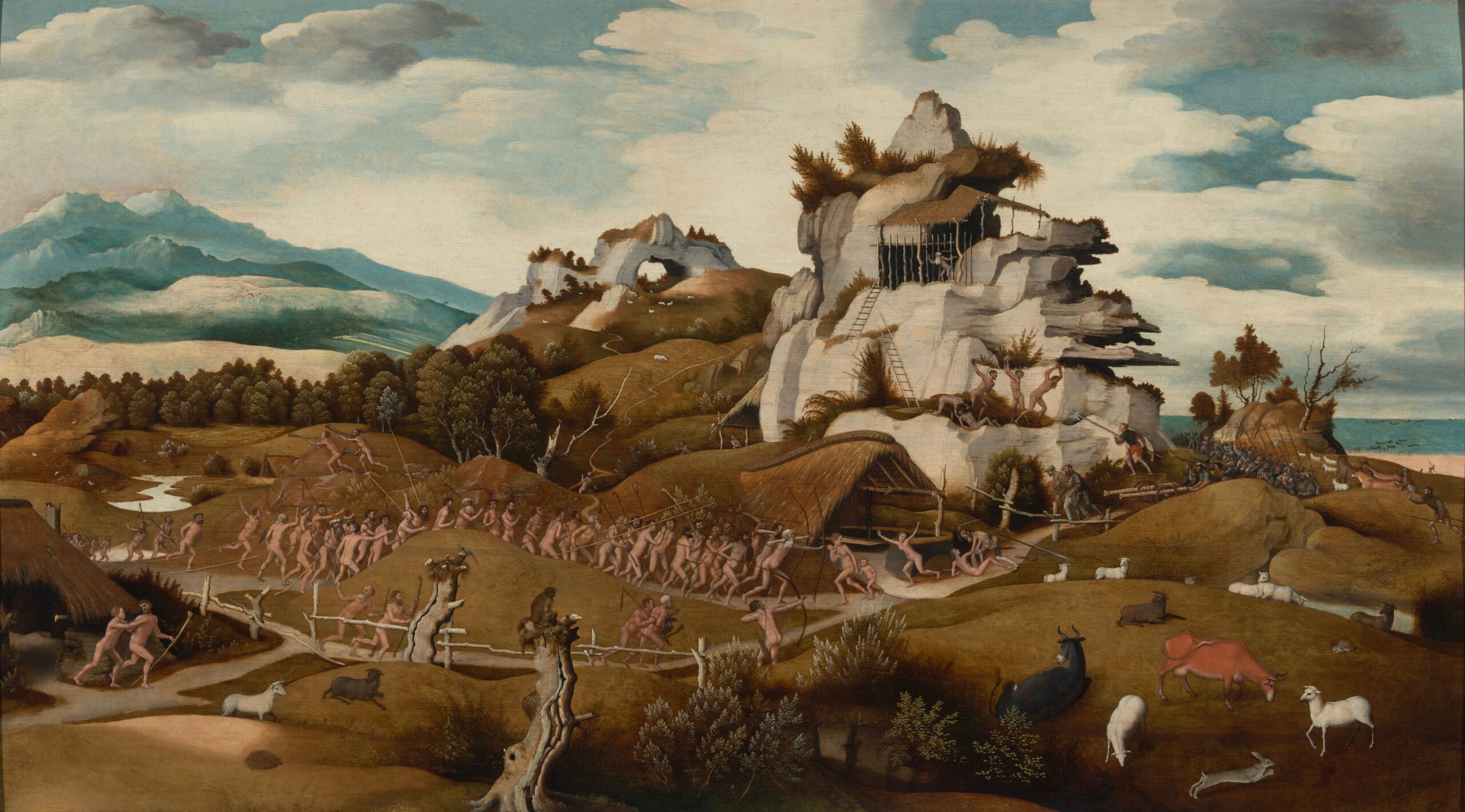
We approach the subject of “phantom archives” via the repositories, that in the sixteenth and seventeenth centuries, were kept by groups of Chiriguanaes, Guaraní-speaking peoples whom the Spanish regarded as “unconquered” and who inhabited the valleys east of the present-day Bolivian Andes.
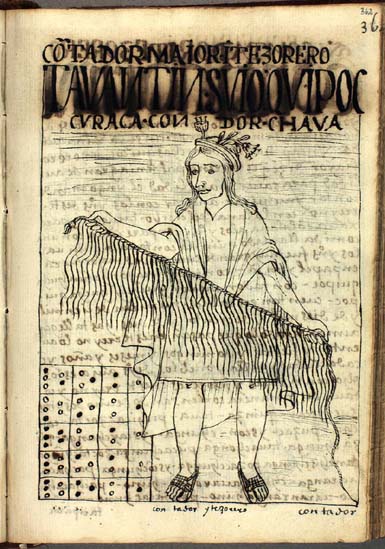
Studies of Indigenous archives have often emphasised records created by Indigenous peoples themselves, including paintings, textiles, books, and khipus. However, this study has a different focus: the correspondence and normative paperwork written by Spanish officials and/or mestizos, among other brokers, that was exchanged with the Spanish authorities and retained by the Chiriguana communities. This approach poses various questions: what was kept, and by whom? In what form, and for what purpose? How did these collections evolve? Why do their traces now appear within Spanish colonial documentation? The case under analysis here could offer an alternative path to study other “phantom archives”.
Following the Paper Trail
Reconstructing such an archive begins with locating fragments among the thousands of documents dispersed across multiple repositories. Digitisation assists this search yet it remains uneven. Finding a record is only the first step: historians must also ask why it occupies its present location, how it relates to neighbouring papers, where it was previously circulated, and what its placement reveals about earlier archival contexts. Provenance and documentary journeys may disclose as much as textual content.
Evidence about Chiriguana archives survives especially in Spanish reports of merits and services, whose authors sought royal rewards by portraying correspondence with Indigenous peoples as proof that they had pacified the frontier. These self-interested records preserve otherwise invisible indications of Indigenous record-keeping.
A dispute begun in 1590 between Captain Melchor de Rodas and royal official, don Pedro Osores de Ulloa, sets an example. Contesting claims made by Osores de Ulloa saying that he deserved credit for maintaining frontier peace, Rodas referred to political “love letters” sent around 1588 by the Chiriguana chiefs, Mapaé and Arepa.
One was already about a decade old, indicating that the chiefs had retained written records for a considerable period.
The paperwork for this case followed several routes. Notaries drafted documents in Santiago de la Frontera de Tomina; originals were probably kept locally, while copies went to the Royal Court of Justice at La Plata and any material concerning the dispute entered its files. Rodas separately notified the Consejo de Indias in Spain. The chiefs’ letters appear only as references and are absent from the surviving file. Rodas may have kept them, while copies may have remained with his Indigenous allies.
Because the letters remain missing, the Chiriguana repository can be envisioned only indirectly.
It was probably not a permanent institutional archive, but a small, portable collection suited to semi-nomadic life. Papers may have travelled among chiefs’ belongings and been entrusted to brokers capable of reading, translating and interpreting Spanish documents.
The surviving clues suggest collections dominated by correspondence and normative instruments that recorded and validated alliances with the Spanish, providing guarantees of mutual protection.
Little is known about classification. A limited number of documents may simply have been bundled together, perhaps beside clothing, ornaments, metal goods, and weapons associated with relations across the frontier.
Reading What Is Missing
Further evidence demonstrates that phantom archives include absent originals and show the fragility of repositories.
In 1595, Captain Pedro Mendoza Quesada was ordered to capture Bartolomé Sánchez Capillas, a mestizo living among the Chiriguana who performed clerical work and assisted with firearms. His hosts demanded written guarantees. They first obtained capitulaciones from Spanish negotiators and then, probably following Sánchez Capillas’s advice, insisted upon a royal provision issued by the highest court. Mendoza Quesada travelled to La Plata and returned with it. His 1612 report of merits records the event and thereby adds the provision to the reconstructed archive, even though no copy has been located.
One copy was delivered to the Chiriguana, while another was probably retained by the Royal Court of Justice. The court’s official notary likely drafted it, and its chancellor applied the royal seal.
Its disappearance, however, may be a result of destruction during Bolivia’s turbulent history, theft, or perhaps from a much more ordinary process: many early modern legal instruments served particular circumstances and lost practical value once those circumstances passed. Records once regarded as important could therefore be discarded when their immediate purpose ended. Phantom archives are produced not only by catastrophe, but often by routine judgements about usefulness and archivability.
The People Behind the Papers
Archives also depend upon people with specialised capacities. The custodians require literacy and sometimes numeracy, knowledge of preservation, and an understanding of why particular records matter. Communities lacking these skills can train members, but learning languages, translation, writing, legal formulas, jurisdictions, and documentary genres requires time and resources that may not be justified for temporary records. An alternative is to host people who already possess the necessary expertise.
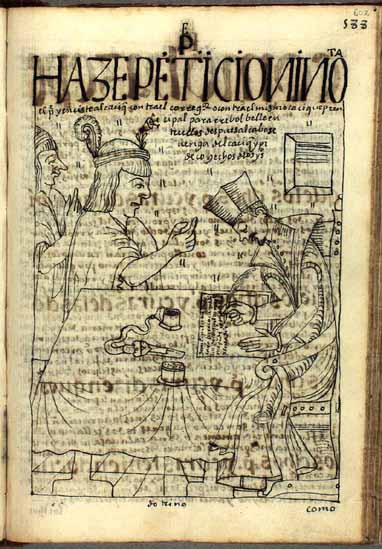
Chiriguana factions adopted this strategy by incorporating mestizos of Guaraní mothers and Spanish fathers, as well as Catholic missionaries. Such figures could write, answer, copy, translate, interpret, and explain correspondence and legal papers. Their position depended on their hosts’ needs, and their knowledge was valued while it remained useful.
Sánchez Capillas exemplifies this intermediary role. Born in Paraguay, he developed a career from his mestizo background and he became an interpreter and broker familiar with Chiriguana factions. In La Plata, he worked with the Royal Court of Justice and acquired legal language and normative knowledge. He feared travelling to the frontier because factional conflict might prevent his return, but the court eventually sent him there. He never came back. Among his hosts, he acquired a household, children and possessions, and became especially valuable to the Chiriguana chief, don Pedro de Mangurrey. Spanish observers represented him as someone who was able to cross social boundaries, alter his appearance and assist Indigenous resistance, including through a knowledge of firearms.
His importance lay equally in navigating the Spanish empire’s overlapping jurisdictions and paperwork. He could distinguish capitulaciones—in this case, negotiated arrangements made by Mendoza Quesada on behalf of the Crown—from a royal provision carrying the authority of the highest court and creating the possibility of appeal. This legal literacy explains why the Chiriguana demanded stronger documentary guarantees and why Spanish forces sought his arrest. It also suggests that an archive’s character may mirror its custodian’s expertise. The lost repository associated with Sánchez Capillas and his hosts was not merely a bundle of papers; it embodied specialised knowledge about political relationships, documentary authority, and legal recourse.
Reconstruction as Detective Work
The broader methodological lesson is that reconstructing a vanished archive resembles detective work. Researchers assemble incidental references scattered across surviving collections; identify copies, translations, and fragments incorporated into other files; trace completed and interrupted documentary journeys; and reconstruct the circumstances of creation, use, custody, and dispersal. Imagination is unavoidable because the evidence is fragmentary, but it must remain disciplined by distinctions between certainty, probability, and possibility. The search is open-ended: missing pieces may surface, yet some gaps will remain unknowable, and newly discovered items may not fit the expected pattern.
This approach also challenges a rigid division between surviving and lost repositories. Existing archives are themselves assemblages made from earlier collections, whose original identities have partly disappeared. Seals, signatures, annotations, and filing practices can preserve evidence of previous ownership and arrangement. Records are continuously reclassified, moved, copied, repurposed, misplaced, and destroyed. Archives are thus living, changing entities rather than fixed containers. They shape research by determining what becomes visible, while historians’ questions and institutional priorities continually reinterpret them. The “phantom archive” is not an exceptional remnant outside archival history, but an intensified form of processes affecting every repository.
Why Phantom Archives Matter Now
The importance of this piece regards the future. Digitalisation does not eliminate archival fragility, and contemporary para-archiving and social media create personal repositories whose memories are selected and resurfaced through algorithms. Physical collections, likewise, face continuing transformation, and possible disappearance. The Chiriguana case demonstrates that archives can survive without surviving intact: their former existence remains legible through dispersed documentary spectres, the people who managed them, and the political relations they sustained. All archives may eventually become phantom archives because their unity is temporary. Their contents migrate, their purposes change and the material supporting them decays. Studying vanished repositories, therefore, illuminates both the past and the fate of archives still among us, underscoring the permanent need to revisit provenance, silences, custodianship, and loss.
Acknowledgements
I would like to thank Dr Benedetta Albani (Max Planck Institute for Legal History and Legal Theory) for her literature suggestions, that though not mentioned here, have been long meditated upon and incorporated; and Prof. Dr. Thomas Duve (Max Planck Institute for Legal History and Legal Theory) for taking the time to read it.
